
Machines? And for engine repair, no less? The kind that do boring and grinding? Some might even ask: does anyone even repair engines anymore? Do they even need any more machines for that in the 21st century? Really? Wouldn’t it be easier to just buy a used one and not worry about it? No, all those machines are long gone, along with the Soviet Lada! And don’t even bother us with that junk!
Indeed, why would a car owner need to know anything about engine repair, let alone machine tools? As one character in a joke put it, “I bought a new car, sold it a year later, bought a new one, and I don’t know if it has a carburetor or not.”
Nevertheless, while it’s completely unnecessary for an owner to know such things, sometimes it’s necessary. For example, to understand that an engine can be replaced not only as a complete unit, on a new one, but t’s not forget, a used one, taken from an old car at a salvage yard. Fortunately, there are several salvage yard in every Polish village. And not only in Poland.
Yes, the owner has to make such a decision unexpectedly—especially after suddenly driving into a puddle and getting hydrolock. Or, for example, a punctured radiator or, even worse, a oil pan. In this case, the convenient “I don’t see anything, I don’t know anything” attitude (because I’m not really into that, right?) is a surefire way to get ripped off during repairs, and end up paying several times more than the actual cost. But can you avoid failure in this case if you forgo the repair in favor of a used car?
On the other hand, it must be acknowledged that the owner of a general service station has it much worse — you can only sympathize with them if they don’t know well either the repair machines or the repair technologies themselves (and they certainly don’t, make no mistake!). Meanwhile, they are already required to know the equipment and technologies needed to check the work—otherwise, how will they be able to choose the right contractor for boring and grinding when you bring them your car with a faulty engine?
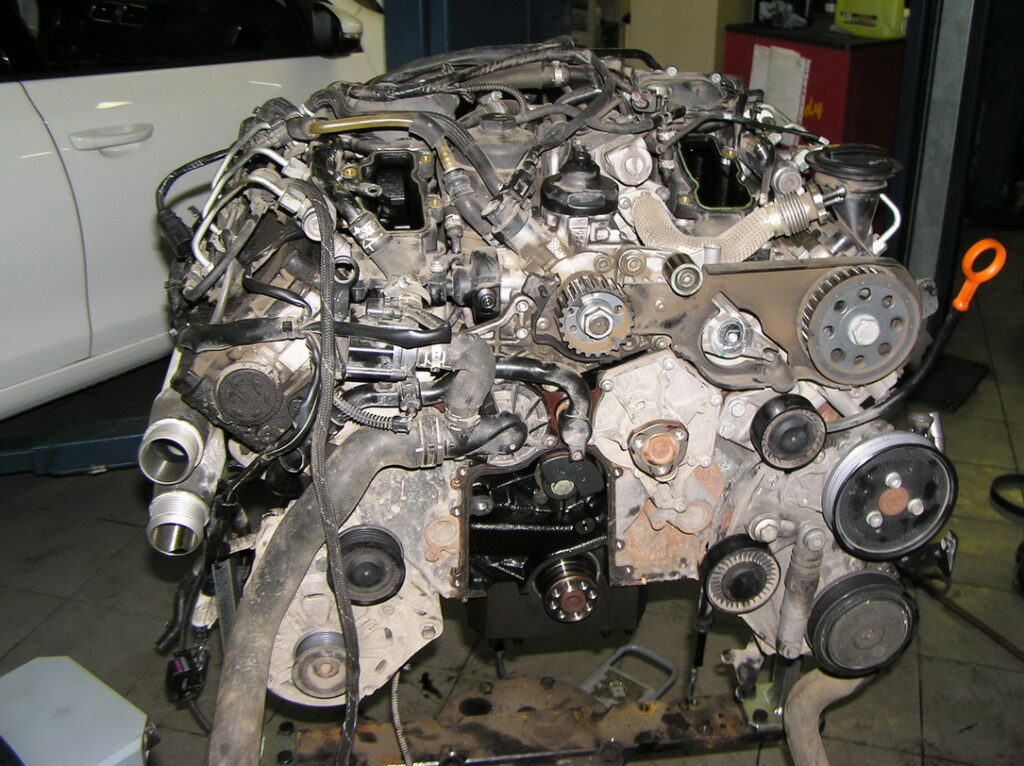
If you think that when repairing your particular engine…
Well, at the top of our machine tool “pyramid” sits the owner of a specialized service station — that same engine repair workshop. His machines and technology must be, as they say, “off the charts” — simply to avoid wasting money and quickly recouping his investment in the machine tools, or, if to translate from technical into everyday language, to do high-quality grinding and boring work and avoid wasting time and money on equipment repairs.
And if you think everything is fine here, at the very top, and there are specialists who understand, then I have only bad news for you…
Will a cabbie take you there?
Experience shows that the owners of some specialized service stations know little more about their equipment than some car owner. Which, of course, dramatically raises the technical level of any car owner — wow, I know as much as a specialist! And that’s exactly so, if you take a look behind the scenes at this “dirty” business called engine and component repair.
What do some car owners think when something goes wrong with their engine? Right — I’ll buy a used engine, and it’ll be cheap and cheerful! Repair? What repair? No, I don’t need repair. The fact that buying a used engine can only hope for a maximum 50% success rate, and for many engines, no more than 30%, doesn’t bother such owners in the least. Indeed, when the used engine turns out to be a dead man, as expected, the owner still rushes to try again a second, and even a third time — and they’ve already spent far more than the repair. And what do they get? A pig in a poke, a dead engine with minimal remaining life? Was it worth the money?
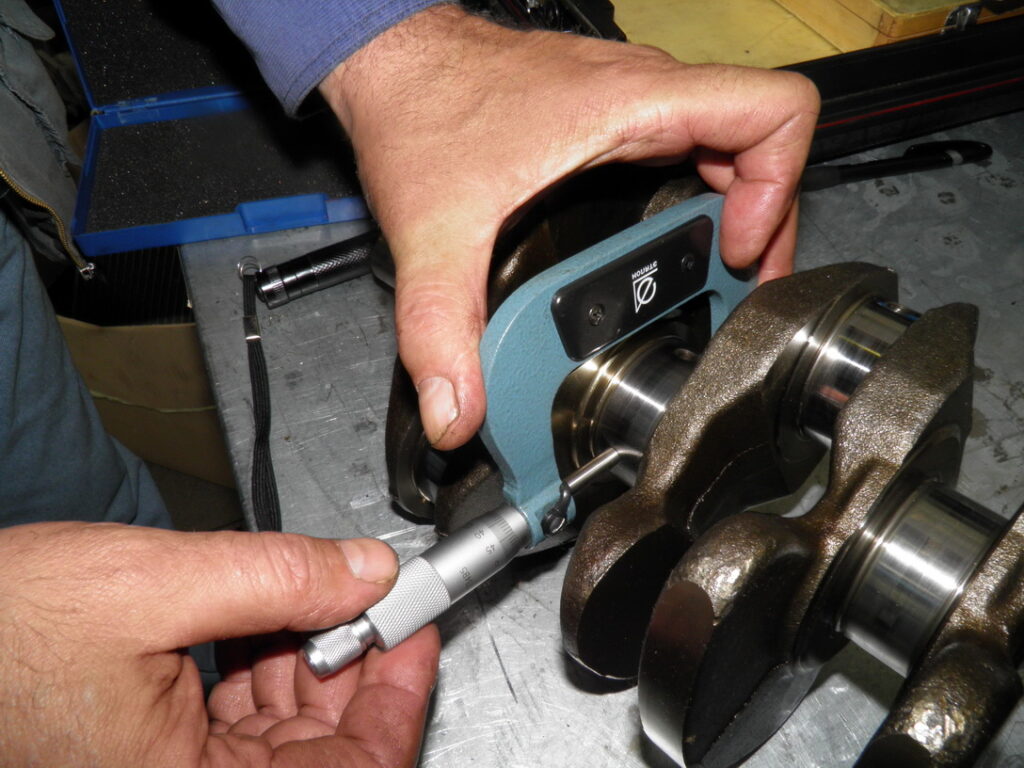
… anyone is going to check anything, we have only bad news for you…
One might assume that we’re talking about a “special” category of owners, the kind who, 30 years ago, easily believed the fairy tales about cars “straight from grandma’s.” This refers to the mythical German Grandma-owner who allegedly drove only 10,000 kilometers in 10 years, when in reality, such a car could have well over 200,000. Well, of course — these are the same people who are always ready to tell you that “I installed this engine, and my car drove” 100,000, 200,000, 300,000 (underline as appropriate).
But no, such fairy tale lovers are still around — apparently, they weren’t taught enough different fairy tales as about “the Goldfish” as children. It’s clear that, as if by magic, every fairy tale lover finds tellers. Advanced, and more often than not, seasoned ones. And now some owners are just as stubbornly ready to believe in a magical engine, freshly removed from that very same car “from under Grandma” (what a coincidence!) – like, the car was almost new, but Grandma had just crashed in a terrible accident, so the engine is that’s all that’s left. For a low price, of course.
It’s clear that in such a scenario, it’s not the machines you need to study, but rather the medicine and looking for a doctor. It’s even understandable – life is very hard, fate hasn’t worked out, anything can happen. But it’s even worse when this happens to those who are supposed to be experts in their field.
Want to know how it all works there? Easy! Just go to the first universal auto service, and see what they say: yes, we’ll fix everything for you, we’ll bring your cylinder block, crankshaft, and cylinder head to a nearby workshop, and then we’ll bolt it all back together in perfect condition! And what’s the main thing? The main thing is to keep the grinding and boring as cheap as possible (this is so that we could sell it to you later at a higher price), and we couldn’t care less about the quality (we’re not the ones driving your car with this engine, are we?) – we just want it done faster. What to check? No, we won’t check how they’ve ground and sharpened it, naturally – it’s not our job, not for the king’s. What? Which machines? No, the machines they do all that on, that’s definitely not our business – they’re the experts “over there,” and only they know how it’s done.
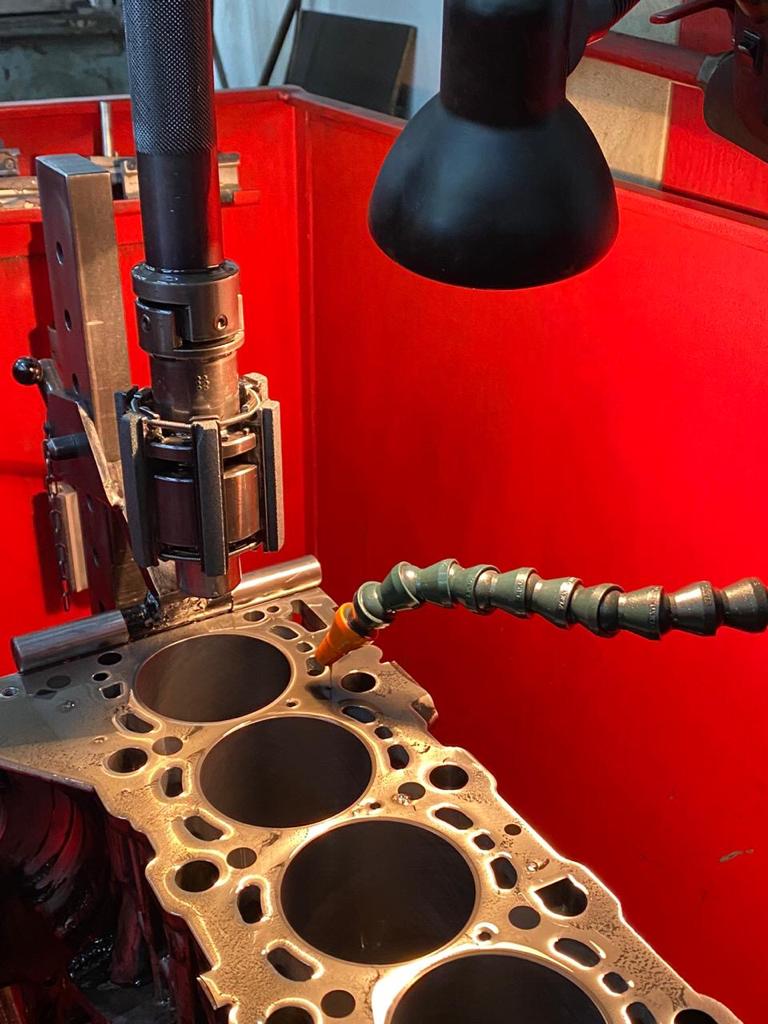
They’ll hone your cylinder block, of course, but on what machine? Surely such a cool and expensive one?
You’re asking about the results? We have them — engines like these don’t run after this kind of “repair.” And if they do, it’s by accident. But your money’s already been spent — who’s going to give it back? So, what happens? Either you understand at least a little about repairs, even very little, or, if you think a specialist knows everything and will fix it (“a cabbie will take you there”), you’ll be stuck running around like a squirrel in a wheel between “dead” used engines and equally “dead” repairmen.
Okay, but maybe the problem is at the very top of the pyramid — in that very specialized engine repair workshop that does all these grinding and boring works? After all, if they do everything well and efficiently, then everything will run like clockwork, right? Yeah, if only…
“When no agreement among comrades…”
Not long ago, on our market, the main problem of the average specialized workshop was the use of outdated Soviet-era machine tools, completely worn out, both physically and morally. Clearly, precision machining of crankshafts and cylinder blocks with heads was out of the question on these old Soviet machines, no matter how hard the grinders-Grandfa tried. Gradually, such machines (and grinders-Grandfa) became fewer and fewer, and the life of an engine mechanic begin to seem being improving, but then disaster struck. And from an unexpected source…
Let’s try to imagine what might be going through the mind of the owner of a specialized engine repair shop these days. Ah, there you have it — “My money has to work, so I need the cheapest equipment for the fastest payback, and right now, because I’m flush with cash, but tomorrow it’ll be gone!” Oops, a near-silent scene…
And indeed, those who think differently are now hard to find — they’ve died out like dinosaurs. All that’s left are the “real” repair businessmen; they don’t care about technology; they’re in business. But ultimately, that’s their business; we won’t be reaching into their pockets. But it might be interesting to see how their business compares to the services paid for by the end customer, the car owner.
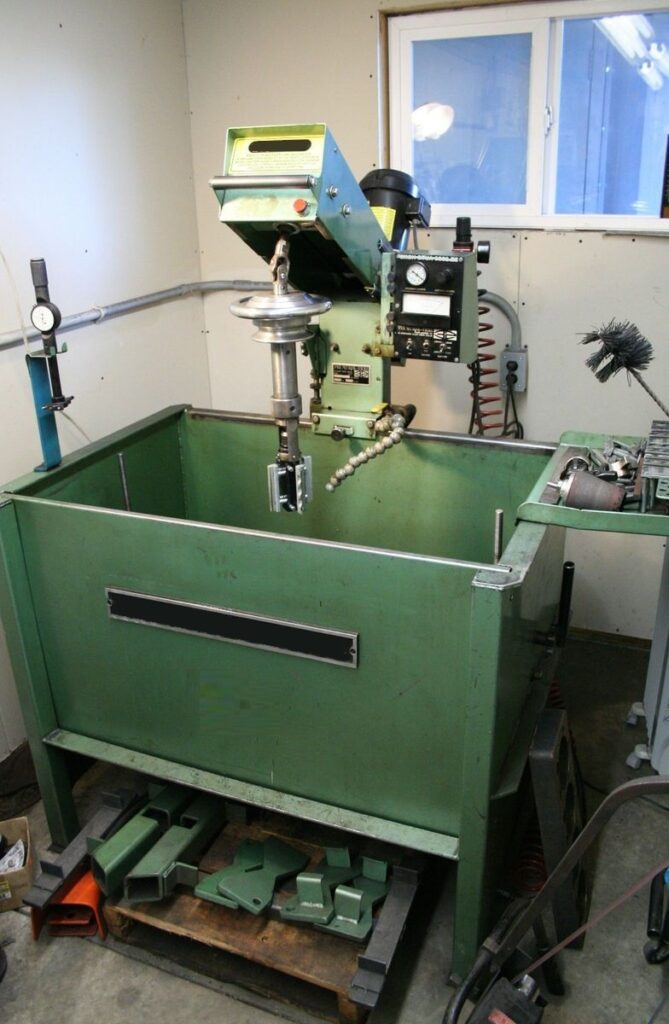
No, you’re wrong. They’ll probably hone the cylinders on the cheapest machine they have available. They might even do it without boring, to save even more money. But if the cylinders turn out crooked, don’t worry — there’s more to come…
So, let’s look at what their “cheapest-cheapest” means right now? This is an important question, because these machines will be used to sharpen and polish your engine, if need be.
First, let’s look at what “cheapest” means. Engine rebuild machines are currently manufactured by dozens of factories in Europe and Asia. Europe is practically stratospheric in price, while the cheapest machines are made in China, and they’re mostly copies of machines from well-known European companies, though the prices for these copies are several times lower than the originals. Things are a bit better in India; at least they’re not 100% copies. But how’s the quality among them? Not very good. Or sometimes even very bad. It’s understandable — a copy is always worse than the original, and cheap is never good. And neither is fast.
By the way, what’s that “buy right now” thing going on? If there’s demand for scrap equipment at bargain prices, there will be supply. Don’t doubt it—savvy traders are already buying up the cheapest Chinese and Indian machines and are ready to sell them wholesale and retail to anyone desperate for cash, just waiting to turn their pockets inside out! Naturally, no one cares about quality — not the machines themselves, nor how well they bore and grind.
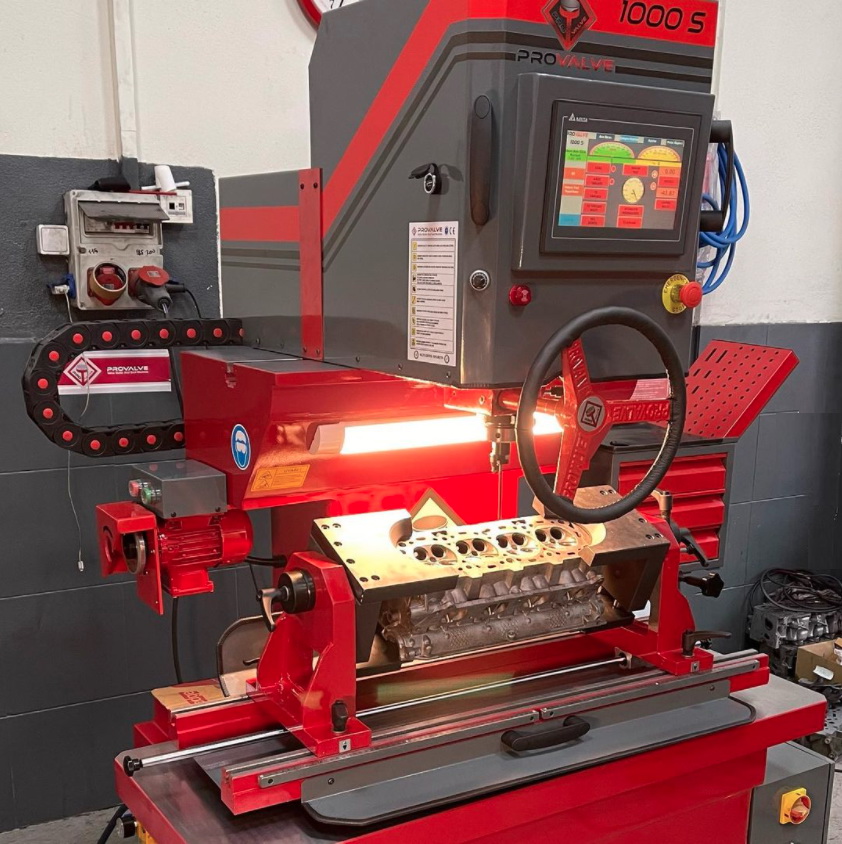
A modern, high-precision, semi-automatic machine with touchscreen control — is this really for the cylinder head seats of your particular engine?…
In other words, the cheapest is a very good match for “right now.” But here’s the question: do you often buy the cheapest things? Do you also have the cheapest cars, TVs, apartments, and houses? And do you always want only the cheapest services? No? Why should machine tools be like that? And if you have a really expensive car, do you really want to fix it with the cheapest equipment and tools? How it will work?
Another question: what’s the lifespan of machine tools? Maybe they’re bought for a couple of years, like a car, and then they’re gone? No, equipment certainly isn’t a car. Consumer goods manufacturers have long been making products that consumers replace every few years, but manufacturers of capital goods operate by completely different rules — their products must last at least 20 years. Leading global manufacturers generally specify a lifespan of 25-30 years.
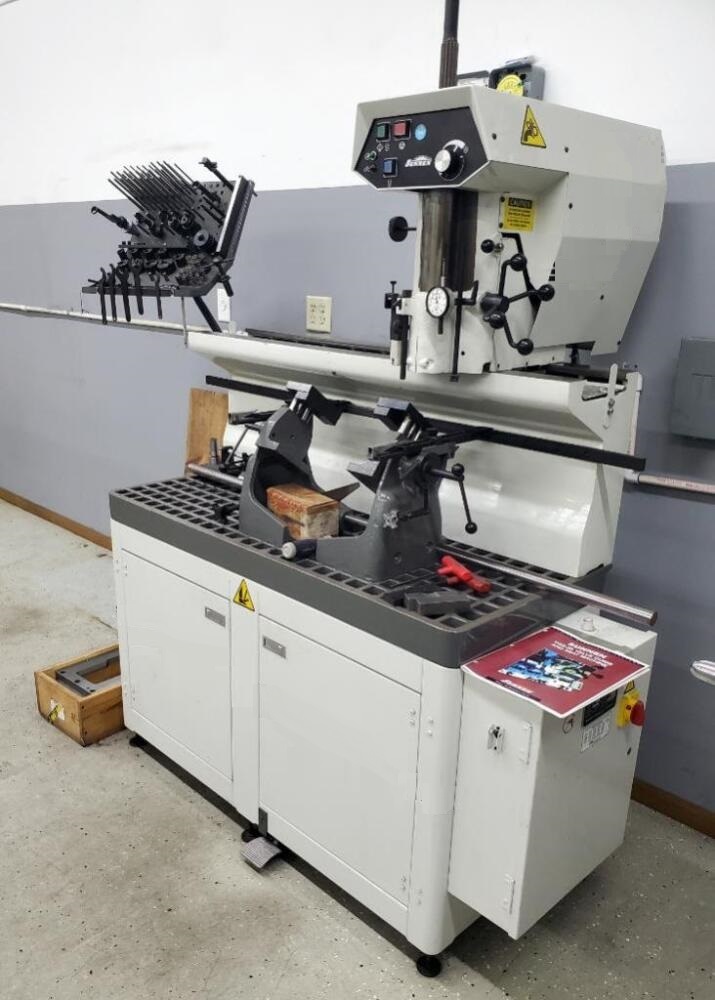
No — to repair the cylinder head of your particular engine, most likely, only the cheapest “off-the-shelf” machine will be used, which is not even suitable for machining your seats.
The next question immediately arises: what about the equipment of the “cheapest right now”? A good question, spot on — nothing. The most economically advanced machines don’t have any special lifespan — where would they get it from, and who would provide it at that price? And what is a lifespan for equipment? It’s the service life during which the equipment maintains its precision and requires small and frequent investments to maintain that precision and performance. And what businessman today would invest in some mythical precision? For what?
Another interesting thing: even a car costing tens of thousands of dollars sometimes has to be ordered and then wait for delivery. But a machine that costs much more — the same car owner, who also owns a specialized workshop, doesn’t want to order it — he want to buy only right now. And who will keep a good machine in stock for him? A cheap one — yes, they’ll have one; a bad one, stale — also, definitely. But why keep a good one in stock if it’s already expensive? The warehouse has its own businessmen; they know how to count too…
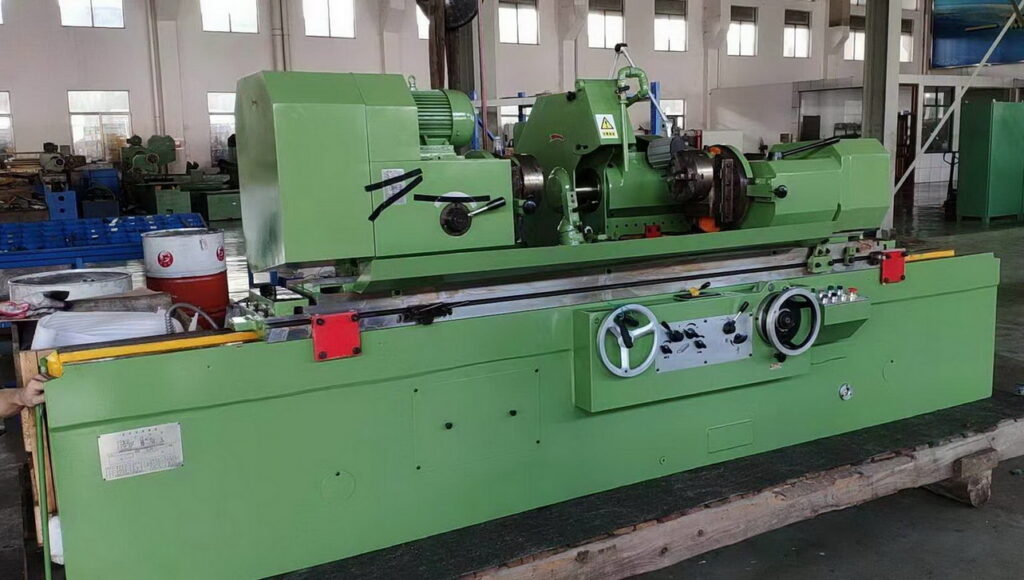
What kind of mega-monster is this? For grinding crankshafts? You’ll be surprised, but this is the only grinding machine model, available in any color, manufactured in China, a country with a population of two billion, by a whole bunch of factories. It’s already been proven: even after a “successful” purchase “from an international warehouse,” even this cheapest machine isn’t guaranteed to grind your crankshaft properly. And how long it works, no one cares…
In other words, some of today’s specialized engine repair shops offer to repair your engine on the cheapest machines of dubious quality and equally dubious precision, while assembling your engine at a general-purpose auto service without any inspection or liability for the work. And no one will give you a refund for such shoddy work when your engine fails again (and it will). And if you don’t agree, they’ll slap you with a used engine, which they represent you as very good, but with a 50-70% chance, it is already a complete worn or even “dead”.
Is there a way out of this vicious circle? Yes, but you have to look. And to look, you have to know and understand. Well, now go figure it out, gentlemen. Or, conversely, don’t bother trying, you’ll only sleep better.
Alexander Khrulev©
Doctor of Engineering Sciences, Senior Researcher
