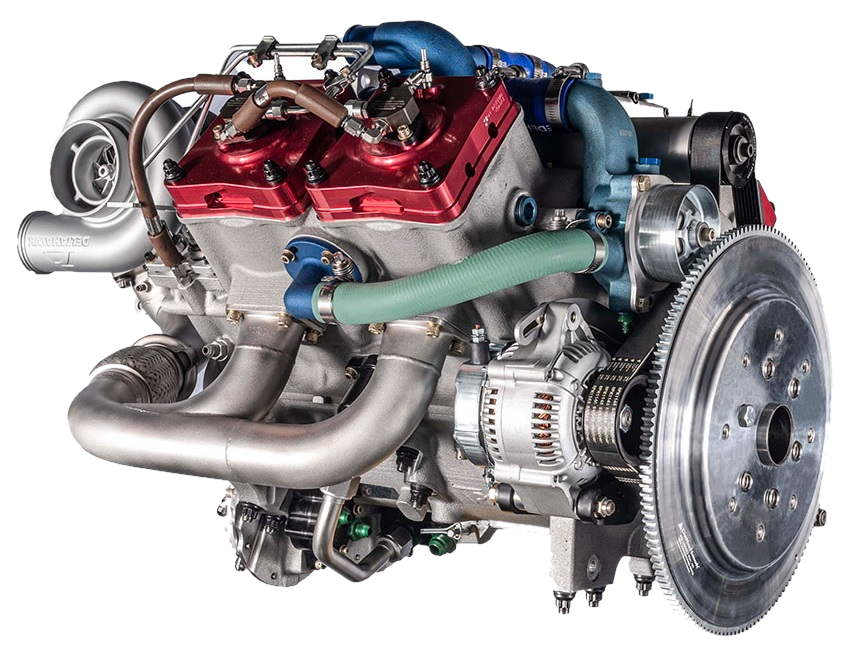
How about we throw some wood on the fire? No, that's not it — how about we pour some gasoline into the combustion chamber?
Why not? — we thought over a glass of tea on a Friday evening. Indeed, we did this at one time, and this was already a good 40 years ago, and this is a top secret topic of pulse jet engines and launch systems for attack unmanned aerial vehicles (UAVs), and all this work was classified to death. Why, you ask, classified? Just in case. And not because they are so super-secret and state-important, but because they were… and nobody needs them. What a paradox, right?
And indeed, at that time (and this is the 80s of the last century) the Soviet generals directly told us that they simply did not need any aircraft model toys — they only needed as many Soviet tanks, guns, missiles and planes as possible, and not all this exotic aircraft modeling. And this despite the fact that they had even a little more of these Soviet tanks, guns, missiles and planes than there was shit behind the old bathhouse. And all of them were simply rolled to zero by the Israeli “military” with the help of the same UAVs in 1982 in the Bekaa Valley…
But now, and in fact, it has been a long time ago, a completely different time has come, when the Soviet tanks and guns have either rotted or burned down, and these works can be used again. But no, again no one needs anything, and no one cares about all this, as before, just like 40 years ago. Like, we ourselves have a mustache.
It turns out that nothing has changed in 40 years? Well, OK — if nothing is needed from us, then we also don’t give a damn about anything from them. But, unlike them, we have something. And we can even just show it. Just for the love of art. Or as a hobby. Well, or just to have. Or, in general, for greater pathos and show-off – why not?
So, our contribution to the matter of attack UAVs consists of several main areas. These are pulse jet engines, turbojet engines, and both types of these engines are directly intended for attack UAVs, as well as launch systems for such UAVs (catapults). Recently, we re-entered the field of piston internal combustion engines (ICEs) by creating an online program for simulating a propeller-driven system for a high-speed UAV.
At different times, we did some research work, the results of which are published and presented in our articles on the topic of UAVs. What kind of work these are, in fact, even their name alone says.
In short, use it and do not deny yourself anything, and we will still do it, if necessary — we can do even more (and we are already doing it, do not doubt it).
1. Our new online UAV propeller-engine system simulation program

Our new research!
It’s well known that over the past 80 years, the power characteristics of 2-stroke engines have significantly improved — the specific power of some models has increased by 3-4 times or more. Consequently, fuel efficiency has improved significantly, bringing two-stroke engines very close to four-stroke engines.
At the same time, despite engine control systems becoming fully electronic, a time-honored element of UAV power plant design remains virtually unchanged: the constant-pitch propeller. It remains essentially wooden, even though traditional materials have long since been replaced by modern, much more stable and durable ones.
But today, the propeller is one of the elements that slows down not only UAVs at speeds of around 150 km/h, but also all further developments of this technology. Electronics won’t help here. But what will? We conducted a study and found…
How can you significantly increase the speed of a UAV with a piston engine?
2. Our educational program: What is a pulse jet engine, what it works with, and how "to combat" it
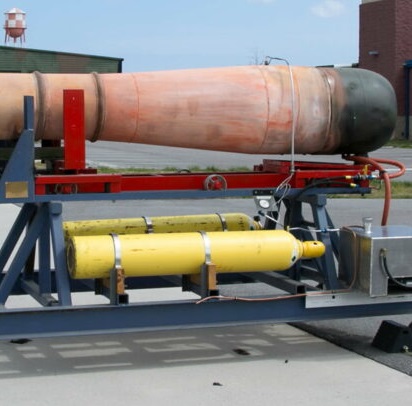
Our Pulse Jet Engine Primer
We’ve been thinking and decided to put together a short lecture on the topic “When the Earth was still warm, and winged jet-powered mammoths and pulse-jet dinosaurs roamed it,” or more precisely, on the history of aviation. Alongside our YouTube lecture series.
We’ve simply noticed, to put it mildly, that some of our know-it-all comrades know so much about pulse jet engines that they… practically know nothing. But they explain it with a smart demeanor. And a lot of people listen to them. That’s why we needed the lecture series.
It’s a very informative lecture, we must say. Stay tuned, you won’t get bored. Indeed, let’s see…
What is a pulse jet engine, what’s it good for, and how to combat it
3. Our online program for pulse jet engine simulation
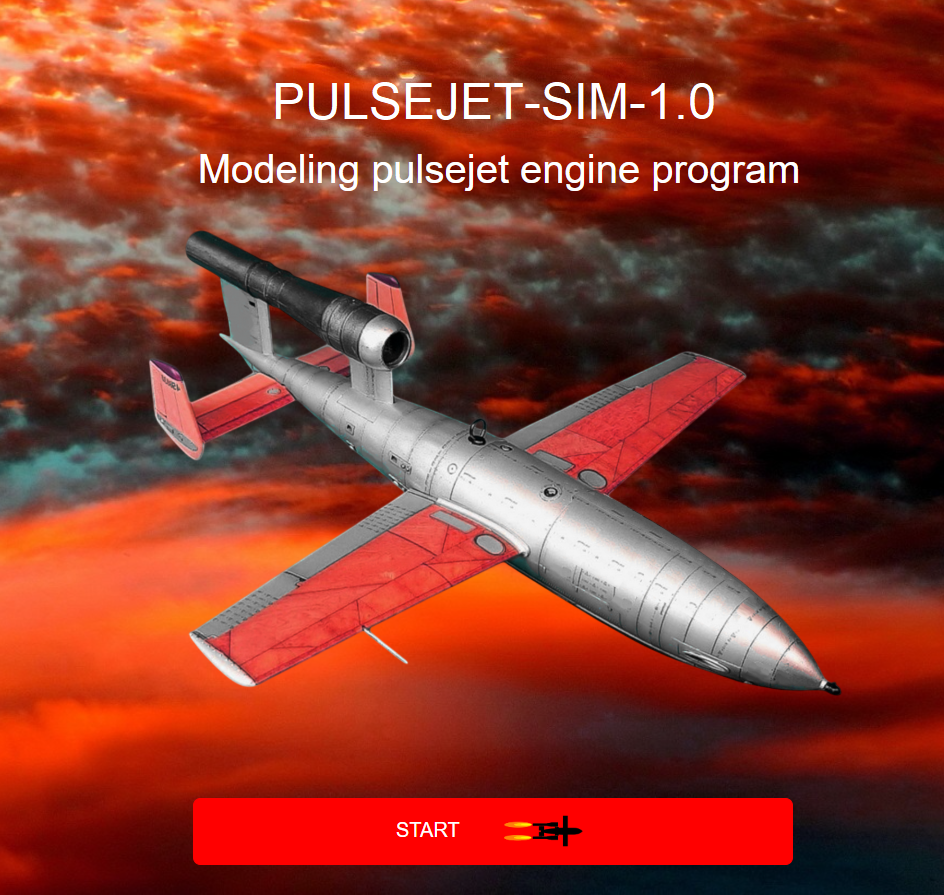
Our super-project of the century — the Pulsejet-Sim program: https://pulsejet-sim.com
We have always been told that the process of fuel combustion and gas flow in a pulse jet engine is so complex and so confusing that it cannot be calculated at all. Then, however, some very great scientists said that yes, this process is so complex that it can be simulated, but only with the help of … the most complex 3-D programs. And there is no other way. But since such programs are available only to these greatest scientists, they thereby only confirmed what everyone has long known – it is really impossible to simulate anything in a pulse jet engine.
So what do we have in the end? The fact that without modeling, nothing works. That is, no – it works, but you have to spend too much stainless steel, time, grinding wheels for cutting and welding electrodes or wire for welding to make it work. Is a simple pipe worth such serious investments? However, until now this path has been the most common, mainly among welding enthusiasts. Cut, weld, cut again and weld again – is this the only possible and correct path for designing pulse engines?
We did not believe it. And generally speaking, it is very difficult to believe that in the 21st century there is some mysterious pipe for which there is no ready-made calculation model and not a single ready-made program has been written. Why is it not written – someone was not given the money he wanted, someone could not or did not want to strain himself because he was sure that it was impossible, and someone decided that it was easier to cut and weld than to think and calculate – it is not even interesting to understand it anymore. We just sat down and in a couple of weeks wrote a model and a program for simulating the working cycle of a pulse engine. Which was then taken and posted on a website specially created for this. And now anyone can run this application. And not just launch it, but even check whether its engine works with the specified parameters, and if it does, then how – well or not so well. Moreover, even on your own phone!
Don’t believe? Try yourself to…
Research, select parameters and design your own Pulse Jet Engine
4. Detailed description of our valved pulse-jet engine mathematical model and modeling program

Khrulev A., Muntyan V. (2025). Mathematical model and computer program development for online modeling of pulse jet engine working cycle, parameters and characteristics. Drone Systems and Applications, Just-In, 2025, 48 p. DOI: https://doi.org/10.1139/dsa-2025-0027
Our fundamental article, “Mathematical Model and Computer Program Development for Online Modeling of Pulse Jet Engine Operating Cycle, Parameters, and Characteristics”, has been published in the well-known Canadian journal “Drone Systems and Applications”. The article describes in detail the derivation of the calculation equations for our mathematical model, as well as the development and design of the Pulsejet-Sim program. The publication of such article simultaneously validates our work within the scientific community and determines it as a form of recognition: before publication, the article was reviewed several times by highly respected aviation engine experts, and after their extremely helpful comments, we even had to make some adjustments to the model and program. However, most importantly, the article serves as a de facto textbook or guide to pulsejet engine modeling, answering the questions “what?”, “how?” and “why?”.
See how to make a mathematical model of a pulse jet engine and transfer it into modern computer program…
5. Modeling of a valved pulse-jet engine using dimensionless similarity criteria
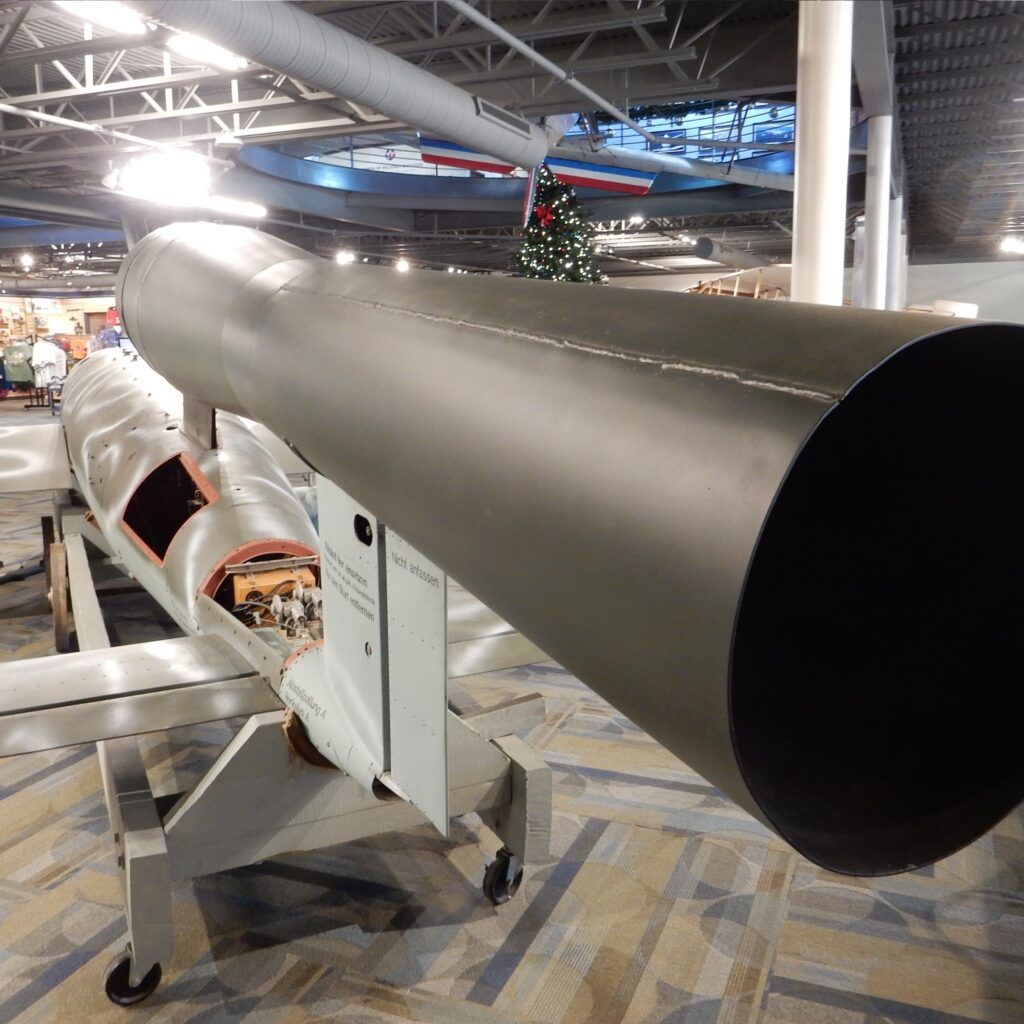
Khrulev A. (2023). Modeling of engine with periodic workflow using dimensionless similarity criteria and piston analogy method. World of scientific research, 2023, Issue 23, Opole, Poland, 24 October 2023. Aviliable at: https://www.economy-confer.com.ua/full-article/4861/
In this study, a simple piston analogy method (or gas piston method) was chosen and applied to a simple valve pulse jet engine to obtain general patterns. The essence of the method is that the engine combustion chamber is presented in a zero-dimensional formulation in the same way as it is done in the thermodynamic description of the intra-cylinder process of an internal combustion engine, i.e. with instantaneous gas parameters uniformly distributed over the volume. Gas flow in a resonance tube in the 1st approximation is considered as an oscillatory motion of a gas column. In other words, the engine is not presented as a tube (as in conventional methods), but as a Helmholtz resonator or a mechanical oscillatory system.
These assumptions made it possible to create a mathematical model from the equations of continuity, momentum and energy. This is a system of first-order differential equations, with respect to instantaneous gas parameters (as functions of time) — pressure, temperature in the combustion chamber and gas velocity in the resonance tube, taking into account the formed flow zones.
During the development of the model, it was also established that if the calculation equations are derived using dimensionless variables (relative to atmospheric pressure, temperature, and the speed of sound), some previously unknown patterns can be identified. As a result, dimensionless similarity criteria for a pulse jet engine were obtained, including a complex parameter and an area coefficient. The obtained criterion dependencies were tested on data from known engines and yielded satisfactory convergence in a wide range of their sizes in terms of dimensionless thrust, cyclic frequency, and specific fuel consumption.
See how to make a mathematical model of a pulse jet engine…
6. Modeling of gas flow in resonance tube of pulse-jet engine by the piston analogy method
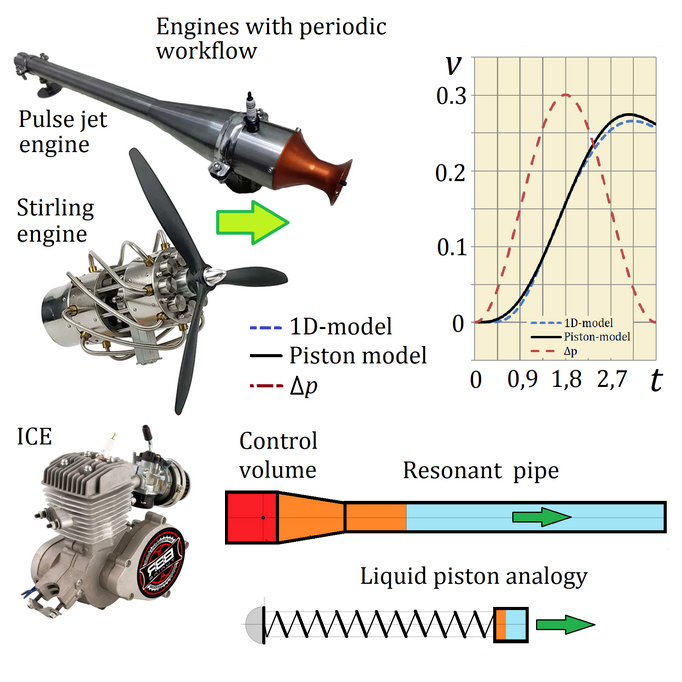
Khrulev, A. (2023). Determination of gas parameters in resonant pipes and channels of engines with a periodic workflow using the piston analogy method. Eastern-European Journal of Enterprise Technologies, 5 (7 (125)), 50–59. DOI: https://doi.org/10.15587/1729-4061.2023.288520
In this paper, the process of gas flow in a resonance tube of a ramjet engine is modeled. Analysis of various flow models and comparison of known data showed that there are still unresolved problems of the correct choice of principles for constructing closed 0-dimensional models of the working cycle. In accordance with this, the question arises about the dimensionality of models of individual engine elements, including the resonance tube model, which must be included in the general cycle model, especially at the initial stage of its development.
To solve the identified problems, a mathematical model of air flow, built on the basis of an analogy with a “liquid” piston, was improved. Unlike existing ones, the piston analogy model allows calculating the instantaneous velocity averaged over the length of the tube using a numerical solution of the differential equation for velocity.
To test the developed model, an alternative finite-difference 1-dimensional gas-dynamic model was selected, using which a test mathematical modeling of air flow in a tube was performed. Based on the data obtained, a comparative analysis of the accuracy and reliability of the piston analogy model was carried out. It was found that the piston model allows finding the flow velocity in a pipe with an accuracy of up to 5% for a pressure drop changing according to a sinusoidal law. The permissible limits of change in the oscillation frequency and pipe length were found, at which the piston model has a minimum error compared to the 1-dimensional model.
Based on the results of the study, it was concluded that with proper consideration of the existing limitations, the piston model gives results close to those provided by more complex models with a higher dimension. This indicates the possibility of using the piston model for pipe-type elements in the 0-dimensional thermodynamic model of a pulsejet as an approximate alternative to traditional 1-dimensional flow models.
See how a pulse-jet resonant tube works…
7. Mathematical modeling of reed valves in intake systems of valved pulse-jet engines
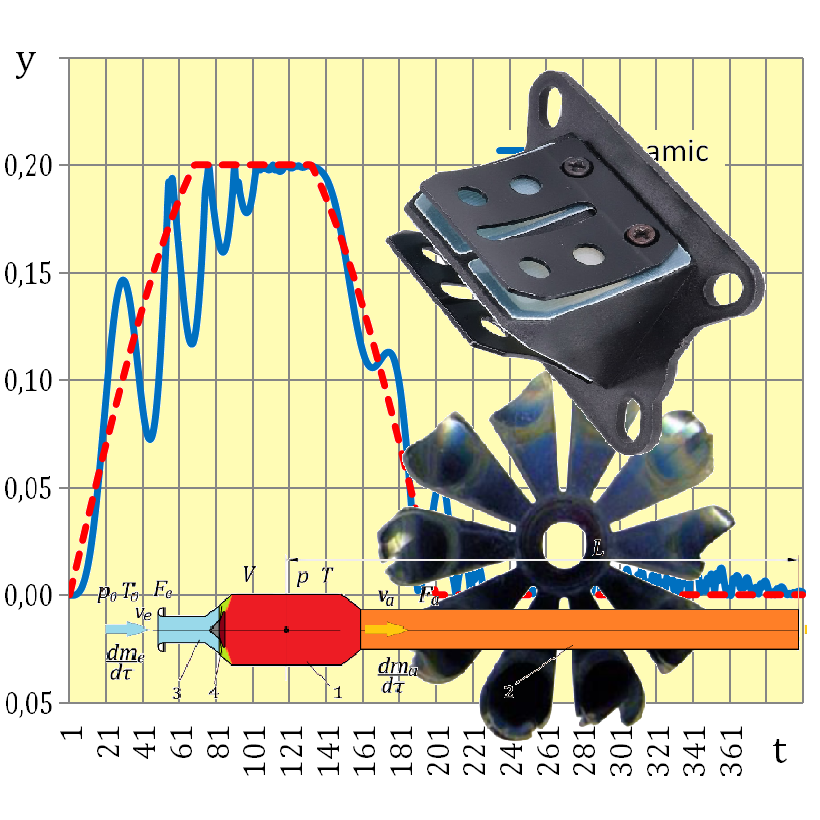
Khrulev, A. (2024). Technical condition assessment and modelling of reed valves in vehicle engine intake systems. Communications. University of Zilina, 27 (1), B41-B52. DOI: https://doi.org/10.26552/com.C.2025.006
In this paper, a simple quasi-stationary model of the intake reed valve of a ramjet engine intended for closing 0-dimensional thermodynamic models of the full cycle and an alternative dynamic model, with the help of which a control mathematical modeling of the valve reed motion is performed, are considered. The aim of the study was to evaluate the efficiency of using a simple reed valve model as a component of 0-dimensional closed thermodynamic models of the ramjet operating cycle or as an independent model in the study of the causes of malfunctions.
To achieve this goal, a model of the engine operating cycle was considered, the influence of the intake valve on the working process through the air flow rate as a parameter by which it is possible to compare valve models was revealed, reed valve models were developed, and mathematical modeling of the reed motion was performed. Based on the data obtained, a comparative analysis of the accuracy and reliability of the quasi-stationary and dynamic models of the reed valve was carried out. It has been established that the quasi-stationary model allows finding the air flow through the reed valve with an accuracy of up to 5-6% for a pressure drop changing according to a sinusoidal law in the case where the dimensionless frequency and/or Strouhal number do not go beyond the range of permissible values of 0.2-0.3, at which the quasi-stationary model has a minimum error compared to the dynamic model.
The data obtained confirmed that, with the correct consideration of the existing limitations, the quasi-stationary model gives results close to those provided by more complex dynamic models, including those with a higher dimension. This indicates the possibility of using the quasi-stationary model for elements such as reed valves as an approximate alternative to more complex dynamic models, which is especially important when creating and pre-debugging 0-dimensional thermodynamic models of ramjet engines.
See how a reed valve works in a valved pulse-jet engine…
8. Use of commercial micro-turbojet engines for high-speed operational-tactical UAVs
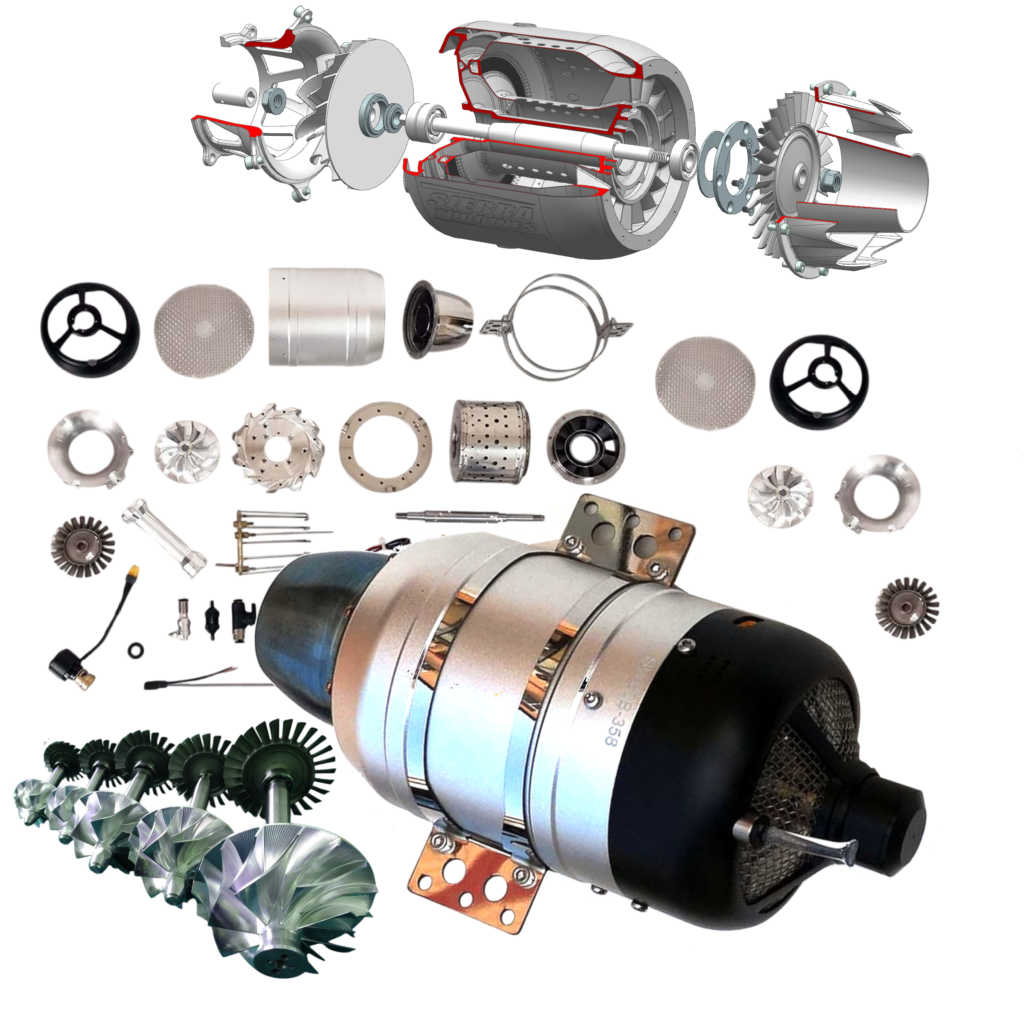
Khrulev A. (2023) Analysis of possibility of using commercial micro turbojet engines for high-speed small-sized operational-tactical UAVS. Aerospace Engineering and Technology, No. 4, special issue 2 (190), pp. 5-18. DOI: https://doi.org/10.32620/aktt.2023.4sup2.01
This paper examines the technological advances that made it possible to create serial commercial micro-turbojet engines with a thrust of up to 1 kN by the 1990s, but it is noted that engines of this type have not yet been widely used in the class of high-speed unmanned aerial vehicles weighing up to 200 kg. Nevertheless, it is known that companies in the military-industrial sector periodically demonstrate new developments of both individual small-sized jet UAVs and micro-turbojet engines for them. Therefore, the use of micro-turbojet engines continues to be considered promising, and a large number of studies are devoted to the study of these engines.
Despite this, existing studies often use a simplified approach, when micro-turbojet engines are considered in isolation from their possible aviation applications, or when UAV aerodynamic issues are studied in isolation from the engine and its characteristics. This can lead to the selection of non-optimal parameters and incorrect limitations on the scope of application of micro-turbojet engines. To eliminate the above-mentioned problems and evaluate the efficiency of using serial commercial micro-turbine engines on high-speed UAVs, the standard program for gas-dynamic calculation of gas turbine engines GasTurb14 was used, with the help of which gas-dynamic calculations were performed, a design diagram was obtained and mathematical modeling of the micro-turbine engine characteristics was performed.
Based on the obtained data, an analysis of the conditions and efficiency of using the considered engine type on high-speed UAVs was performed, possible manufacturers and models of engines produced by them, as well as their configuration, were determined. It was found that for UAVs of the considered class, the engine should have a pressure increase ratio in the compressor in the range of 4.2-4.7, and it is advisable to select the flight operating mode of the micro-turbine engine at a rotation speed of 92-95% of the maximum. It was also found that UAVs with micro-turbine engines, in comparison with piston engines, easily provide the same flight range with the same relative mass of fuel due to at least three times higher speed. As a result, the use of micro-turbojet engines is more effective at a flight range of over 300 km, and at a flight speed of over 150 m/s (540 km/h), micro-turbojet engines provide a significant advantage over piston engines for a number of operational and tactical tasks.
See how to choose the right turbojet engine for an attack UAV…
9. Modeling of a pneumatic catapult launch system taking into account the characteristics of the engine and UAV
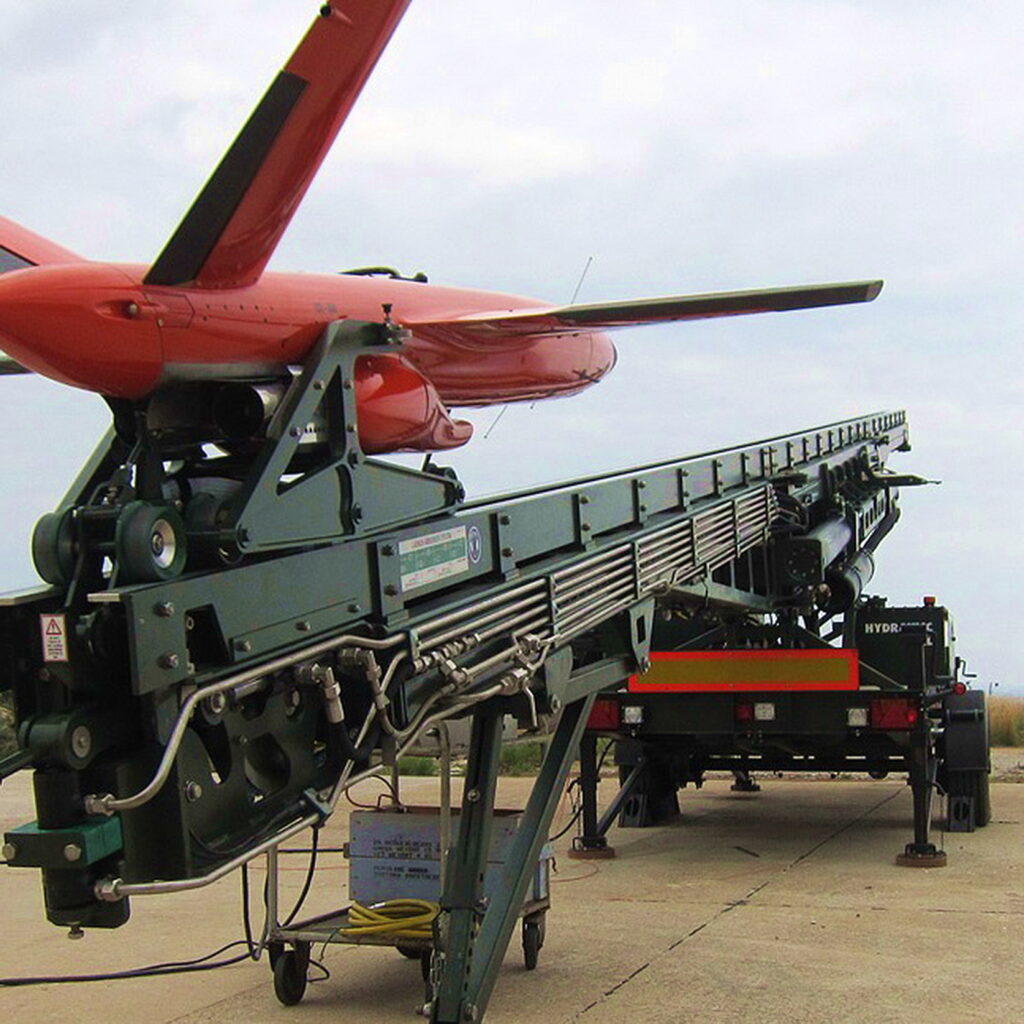
Khrulev, A. (2023). Analysis of pneumatic catapult launch system parameters, taking into account engine and UAV characteristics. Advanced UAV, 3 (1), pp. 10-24. Aviliable at: https://publish.mersin.edu.tr/index.php/uav/article/view/1045
This paper notes that despite significant advances in the development of modern unmanned aerial vehicles (UAVs), universal launch systems are not currently used for them. In fact, each UAV project requires its own launcher, which is ineffective in many cases. This is especially true for relatively heavy tactical and operational-tactical UAVs weighing 50 kg or more, for which pneumatic launch systems are mainly used. Simple methods at the level of force analysis are used to evaluate the characteristics of UAV launchers, but they do not provide the ability to correctly select the type and parameters of the catapult for specific tasks. In the absence of the necessary methods, this leads to design errors that significantly narrow the scope of application of the launcher.
To eliminate these problems, a mathematical model of a pneumatic catapult was developed, differential equations of motion and changes in gas-dynamic parameters of structural elements were compiled and numerically solved, an analysis of the characteristics was performed, and the choice of the design scheme and main parameters of the pneumatic catapult was substantiated. Modeling has shown that no special sealing of the pneumatic cylinder piston is required for the effective operation of the launcher; air leaks through the gap are controllable due to the short process time even at high operating pressures. In addition, the permissible minimum height of the cable attachment point on the trolley above the block roller has been determined, below which the loads on the cable and piston increase sharply.
As a result, the developed model has confirmed the universality of the use of the pneumatic catapult of the considered design for operational and operational-tactical UAVs with a take-off weight of 50 to 250 kg, and such a wide range is provided only by regulating the air pressure in the receiver and is not available in systems of other types. At the same time, if the increase in pressure is limited by safety requirements, the possibility of further increasing the take-off weight of the UAV in the catapult design under consideration will be preserved by increasing the diameter of the pneumatic cylinder.
See how to correctly simulate a UAV launch from a pneumatic catapult…
10. Rotary micro-turbojet
Khrulev A. et al. Small-sized gas turbine engine. USSR Author’s Certificate № 995563, F02 C 6/00, 20.10. 1980.
https://engine-expert.com/…/1980avt_5-1.pdf
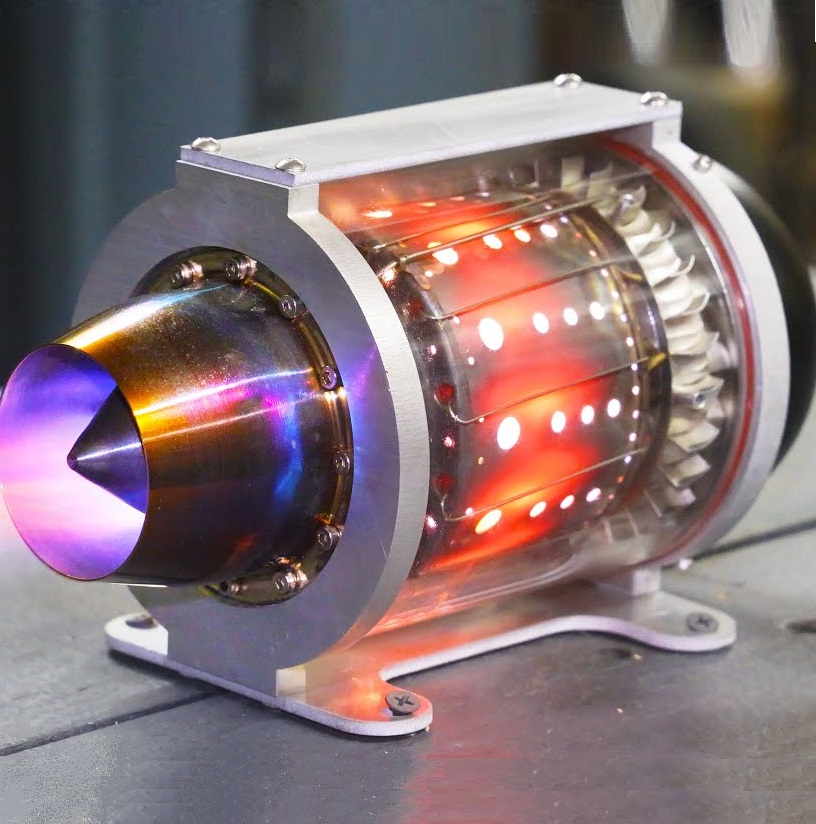
A unique development of the so-called rotary turbojet engine of those distant times, when there was no trace of any micro-turbine engines. And since the main problem in their creation was the problem of gaps (and leaks) between the rotating blades and the stationary casing, the project solved this problem in a radical way – there were simply no gaps due to the fact that all the blades were tightly attached to the casing (which rotated).
During the study it was found that a very interesting vortex is formed in the combustion chamber, which allows for stable combustion in a small volume when fuel is injected into its zone due to the very long length of the swirling flow path (which is impossible in conventional combustion chambers.
Another advantage of the scheme was the lack of need for straightening (directing, nozzle) compressor and turbine blades – their functions were taken over by the vortex formed during the rotation of the rotor.
Unfortunately (or fortunately), this project was never implemented due to a dispute over priority with the management of one very large engine design bureau, which produced very large engines for very large Soviet fighters. And then, in the 90s, micro-turbojets appeared, which we all know, and the relevance of this development (it seems) disappeared. And in vain, because this scheme could have provided parameters unattainable for modern micro-turbojets…
See what a micro-turbojets looked like in those days when there nobody knows micro-turbojets at all…