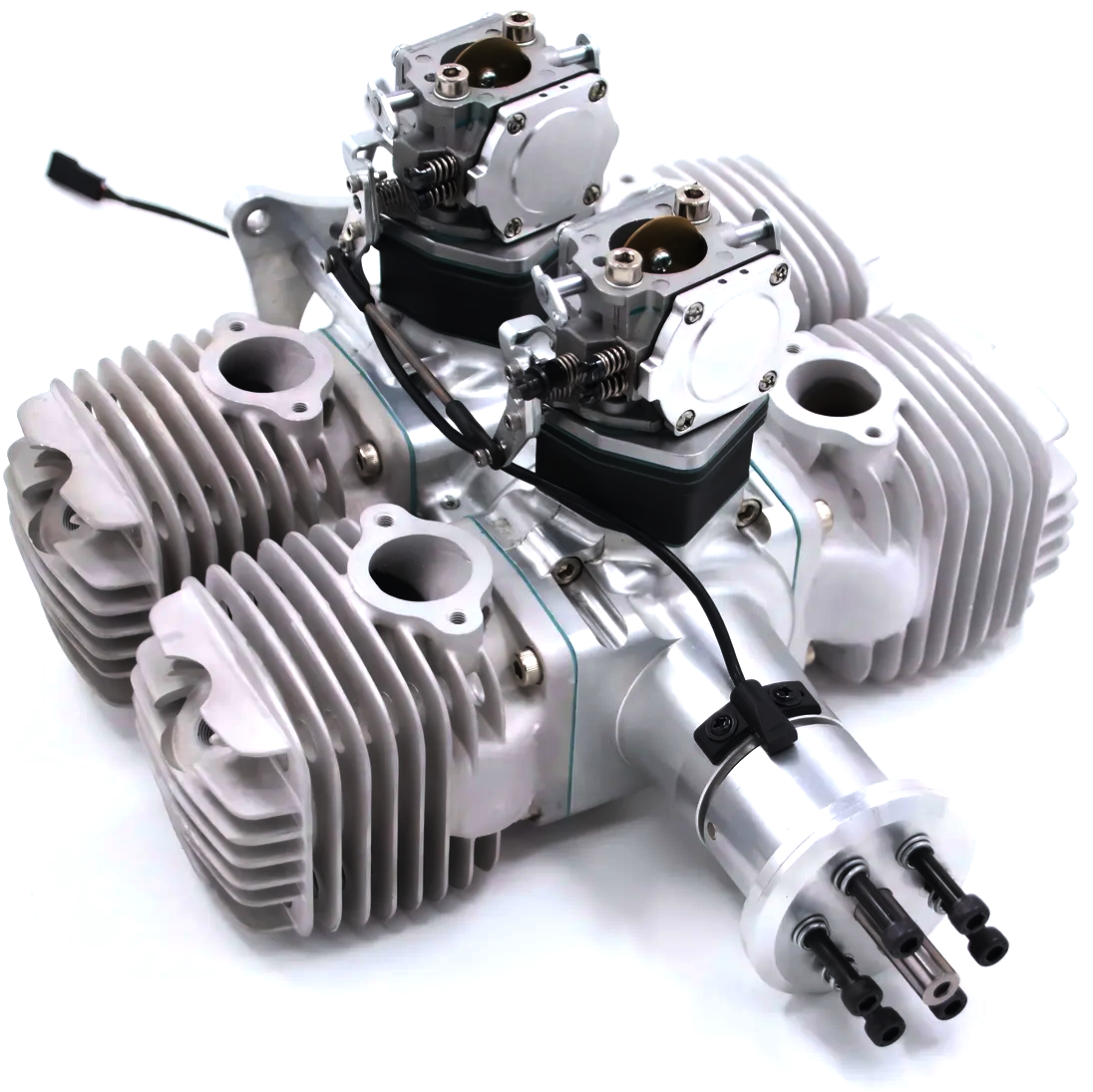
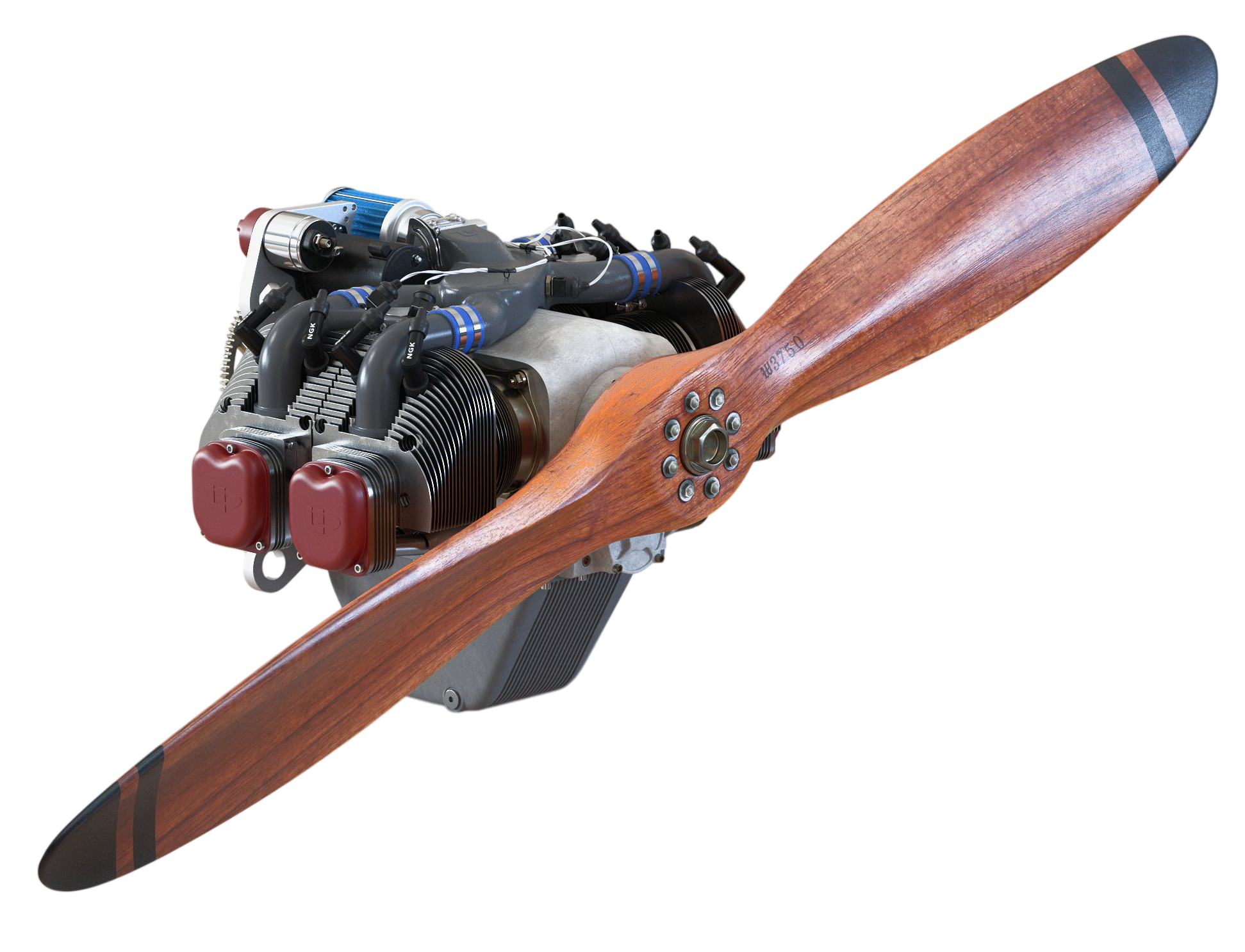
 The internal combustion engine isn’t just an automobile engine. In aviation, internal combustion engines have been called piston engines for over 100 years. And throughout the first half of the 20th century, piston engines dominated aviation. And it’s precisely these engines that power unmanned aerial vehicles (UAVs) today. Moreover, their power output is already quite comparable to that of automobiles — some 4-cylinder models exceed 50-60 hp. But they have one unique feature: instead of a transmission and wheels, they have… a propeller. Although transmission in the form of a reduction gear are also common.
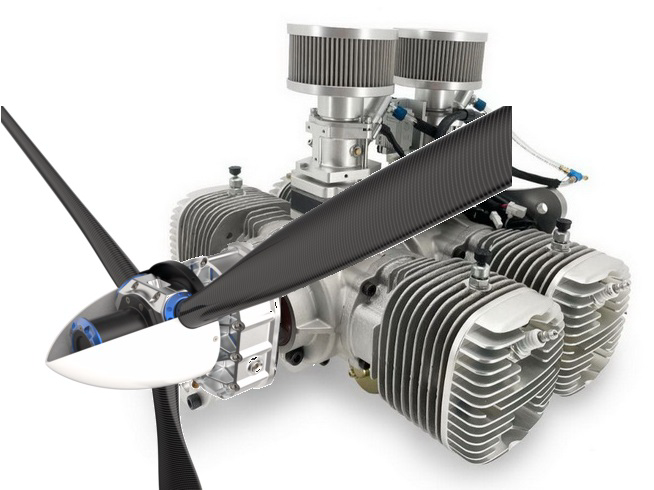
The most common today is the 2-stroke engine, which has a minimal number of parts, minimal dimensions, and weight due to the absence of a valve timing mechanism. However, it’s significant that over the approximately 80-90 years of development, these engines have undergone significant changes and improvements. Thus, cylinder single channel scavenging was replaced by multi-channel scavenging, intake control by piston was replaced by a reed valve, and the carburettor was replaced by electronic fuel injection nozzles, in some models direct, directly into the cylinder.
 This significantly improved the power characteristics of two-stroke engines – the specific power of some models has increased by 3-4 times or more over the past 80-90 years. Consequently, fuel efficiency has improved significantly, bringing two-stroke engines very close to four-stroke engines.
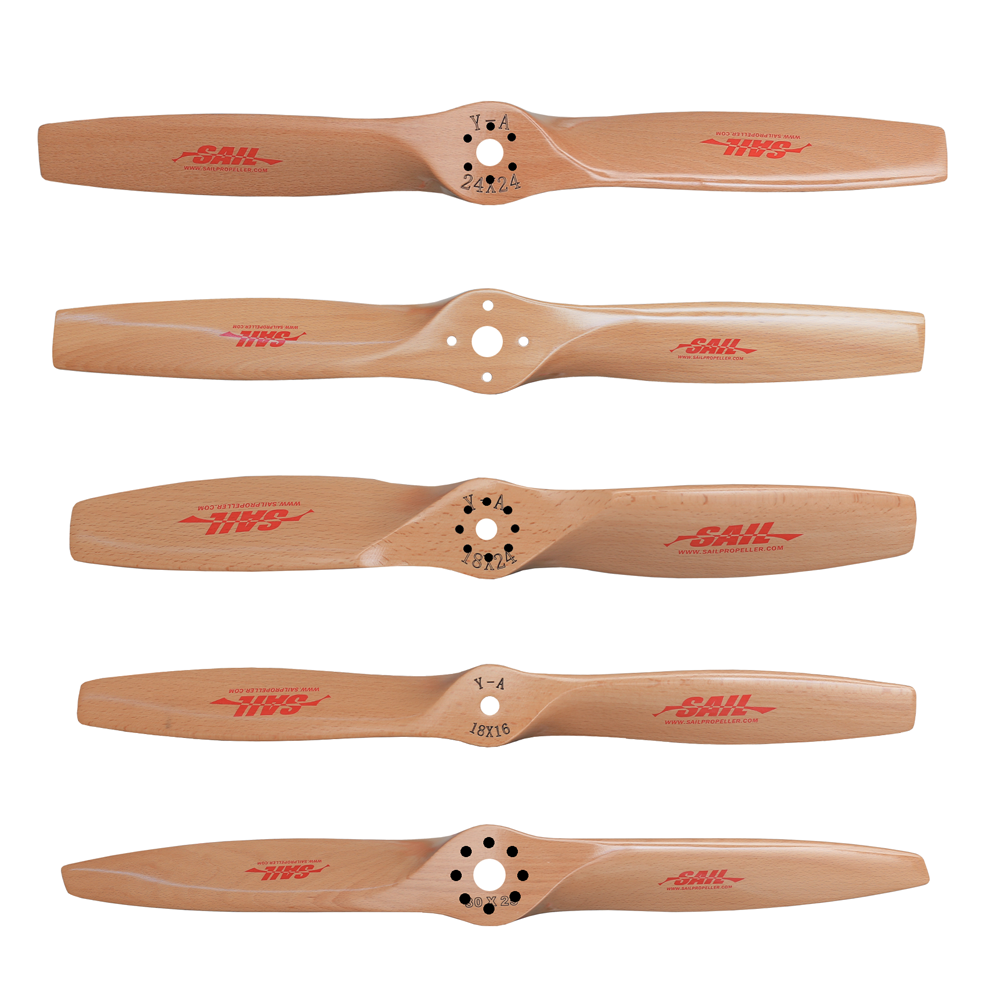
At the same time, despite the fact that traditional materials have long been replaced by modern, much more stable and durable reinforced synthetic materials, and engine control systems have become fully electronic, a time-honored element remains in the design of UAV power plants, which has undergone virtually no changes: the constant-pitch propeller.
The propeller itself is currently one of the elements hindering the further development of this technology. As flight speed changes, the angle of flow onto the propeller blades changes. But a propeller doesn’t like angles that are too big or too small. In the former case, the engine can’t turn a “heavy” propeller and reduces RPM, while in the latter case, the engine can run away with a propeller that’s too light. In both cases, propeller thrust decreases, making the propeller effective only in a fairly narrow speed range. For example, if good thrust is required for takeoff, the UAV’s maximum speed is unlikely to exceed 230-250 km/h, and cruising speed won’t exceed 180 km/h.
 Some experts saw a solution to the problem of increasing flight speed in the use of jet engines. However, this proved problematic due to technical and technological difficulties. As a result, micro-turbojet engines are still of limited use and clearly inferior to piston engines in terms of range, while pulsejet engines have practically never been widely used.
This is precisely the reason for our development. The desire for higher speeds doesn’t necessarily require skipping an entire stage in the development of piston aircraft — the mechanism for changing the propeller pitch. Adjusting the blade pitch angle allows for a three- or even four-fold increase in flight speed using the same engine and technology, using the pitch-variable mechanism as a dedicated booster attachment.
However, to design such a mechanism, it is necessary to calculate the forces acting on the blades and the mechanism itself during flight. This essentially means calculating the propeller — its diameter, blade angle (pitch), thrust, and drive power. And all this within a given speed range.
 No sooner said than done. We integrated artificial intelligence (AI) in the form of ChatGPT and, together, created an algorithm and program for propeller calculation, which we called EngPDrive (engine-propeller-drive). Using the program, given your engine characteristics, you can obtain the parameters of your propeller in the program’s design calculation mode. You can then test this propeller in virtual flight using the so-called direct calculation mode, in which the propeller is tested at different flight speeds.
There are no similar programs in the world today. We currently have the only place where you can determine, within 15 seconds, the propeller diameter, pitch, and gearbox required for a specific engine to achieve maximum thrust within a given flight speed range.
Given the relevance of the topic, the next stage of our development will include UAV design algorithms for determining takeoff weight, component dimensions and masses, onboard fuel capacity, and flight simulation. The final algorithm will be the design of a variable pitch propeller mechanism. Most of these algorithms will be available in the future (although they are already debugged, it takes time to publish and adapt the programs on the website). Today, we can begin with the propeller and gearbox. For this purpose, we have placed the propeller modeling program on our website https://pulsejet-sim.com, and we invite everyone…