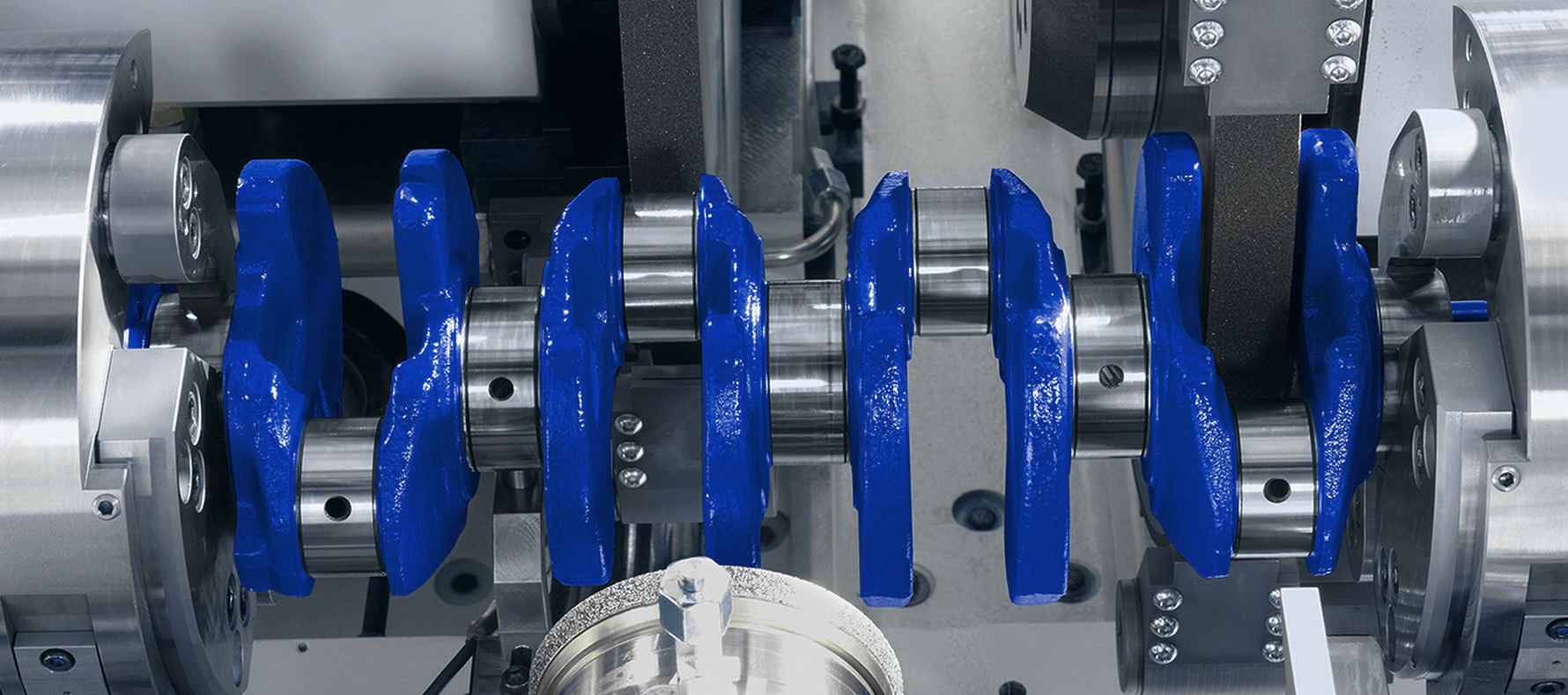
Gone are the days when you could practically grab an ancient Soviet crankshaft grinding machine for next to nothing. But these machines have already long since become more like scrap metal and are no longer capable of accurately grinding modern crankshafts. Accordingly, the task of re-equipping the workshop with modern grinding equipment is becoming increasingly urgent. However, is it possible to do this in practice?
It is no secret that today a crankshaft grinding machine is one of the most, and maybe even the most expensive item in the entire range of engine shop machines. Moreover, this item is also the most accurate, since grinding accuracy is no longer fractions of a millimeter, but microns. And in general, for a grinding machine, an accuracy of 5 microns is somehow not even a conversation about anything (because it should be more accurate).
Unfortunately (or fortunately), the times when you could grab an ancient machine from the distant Soviet Union for next to nothing are long gone. Today, you can no longer find such machines, and they do not meet modern requirements.
You can already hear exclamations: how come they do not meet? And if you look? Indeed. But first of all, it would be nice to understand what crankshaft grinding is and how to deal with it.
Part 1. GENERAL INFORMATION ABOUT CRANKSHAFT GRINDING
.
1.1. Why grind a crankshaft at all?
In general, yes – the question is interesting. Indeed, the crankshaft grinding operation is very specific, and it has such interesting features that, at the very least, make you think:
1. Not every crankshaft can be ground, not every manufacturer allows it, and not every crankshaft has repair bearings. In other words, manufacturers limit the possibility of grinding their crankshafts as much as they can. And this is understandable – you need an appropriate machine and a specialist operator for it. Do they really exist?
2. As practice shows, not every machine can grind a crankshaft with the required accuracy. And this is clearly not a 30-50 year old machine. And what do you have?
3. Grinding requires a specialist of sufficiently high qualification. And the older the machine, the higher the qualification should be. And such specialists are practically not trained now – there is nowhere, no one, no reason. Who will grind?
4. The fact that a rare automobile manufacturer has repair bearings in their catalogues/warehouses has long been known. As is also known, the main manufacturers of repair liners are independent companies. But do they make the necessary bearings? Maybe the engine is so new that production has not yet been established? And if they do (that is, such bearings are in their catalogues), then is it possible to find them somewhere physically? After all, it is no secret that such production is launched periodically in batches, as warehouse stocks are exhausted and new orders come in. But is it all somewhere?
In other words, the process of grinding the crankshaft is overgrown with such accompanying problems, and in such a quantity, that they complicate it so much that a legitimate question arises – is it not easier to buy a new crankshaft instead of repairing a worn or damaged old one? Is this type of repair necessary at all?
Indeed, if you look at engine repair in general, then for the repair of 4-5 cylinder heads and 2-3 blocks you will get for repair to your workshop only one crankshaft, maximum two. For the simple reason that the service life of crankshafts is much longer than that of cylinder heads and blocks. By the way, this fact is even taken into account by some manufacturers of engine repair equipment – for example, the Italian company COMEC has almost all types of machines in its program but does not make machines for grinding crankshafts.
Nevertheless, you simply cannot do without grinding the crankshaft. For example, when it is impossible to buy a new crankshaft. Or when it is extremely expensive. And in general, simply comparing the prices of most new crankshafts with the prices of repairs will clearly not be in favor of a new shaft. And if you consider that a new crankshaft is sometimes made in an unknown place, of unknown quality, and it is not clear how long it will last, while the old one had no issues with this at all, then we smoothly approach the fact that it will have to be repaired anyway.
And then the question “on which machine?” takes on special significance…
1.2. Why did the old grinding equipment “order a long life” and is not suitable for work?
It so happened that in Ukrainian city of Lubny there was the only machine-building plant in the entire former USSR, which produced practically the only model of grinding machine for crankshafts. At first it was 3A423, then it was modernized into 3B423, and then came 3D423.
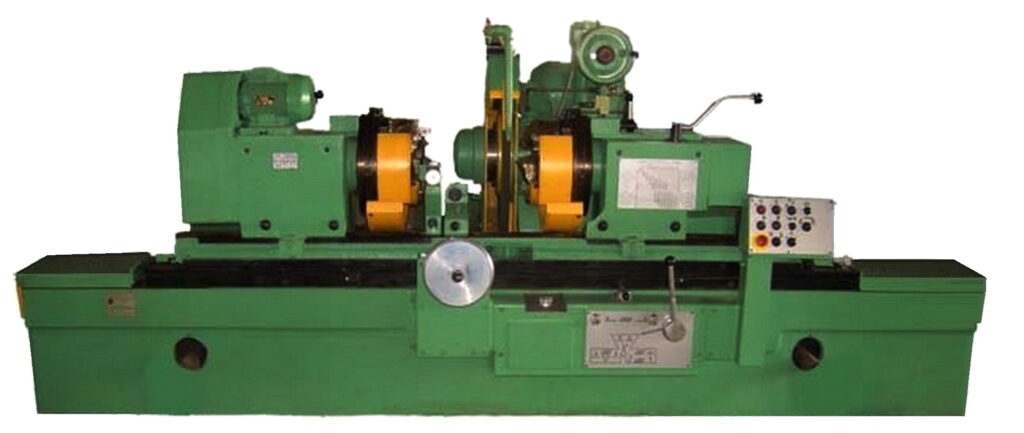
This mastodon machine model 3B423 has not been produced for a long time. Although even more ancient mastodons 3A423 are still working. They have long been incapable of grinding qualitatively, but with their help it is easy to do cheap and cheerful.
And everything would have been fine, if not for a whole series of “BUTs”.
1. Let’s start with the fact that the design of this miracle of technology itself was, to put it mildly, not the most advanced. Perhaps the amount of cast iron in the bed was supposed to compensate for the accuracy, stability and ease of operation. But it didn’t work out. Rather, it turned out the opposite.
2. These machines were not designed for fast operation. Reconfiguring from connecting rod to main journals required so much time and effort that many workshops and shops worked on 2 machines at once, just to avoid reconfiguring them.
3. The set-up centering devices of these machines did not provide for precise adjustment of the position of the rotation axis (there was no transverse adjustment of the position of the chucks). As a result, the crankshaft occupied a certain position in the machine, but at the same time, the rotation axis in the machine did not correspond to the rotation axes of the journals. Therefore, it is practically impossible to ensure the precision of grinding modern crankshafts, in particular the parallelism of the axes of the connecting rod and main journals, on these machines.
4. Due to the archaic design features of the machines (for example, no antifriction coatings were used in the design of the guides), their service life before repair was very small, which required regular repair and adjustment, once every one or two years, with the dismantling of the headstock and table and manual scraping of the guides.
Why is this? The answer is simple – these machines were developed at a completely different time, for completely different engines and operating conditions. And there are still many such machines, which is not surprising, since they were once produced in extremely large series, many hundreds of pieces per year. But today this archaism is hopelessly outdated and is simply no longer suitable for grinding modern crankshafts.
Another problem, and it has really become the main one in recent decades, is that it is impossible to find anyone willing to learn how to work on these mastodons. If the machine does not have a touch screen TV (like a smartphone), and the machine is completely blind, then the operator must work blindly, feeling hundreds or even microns with his fingertips. And the more archaic the machine, the older the operator must be. But the old men who worked like that all their lives are gone and will never come back, and the youth do not want to deal with manual dials, flywheels, handles and buttons – not for any money.
It follows directly from this that an attempt to equip a newly organized repair production with old Soviet junk bought at the price of scrap metal (but that is a good price, huh?) will fail in advance – today, a really operating enterprise needs completely different machines. But which ones?
Firstly, these are clearly not used machines from the same Europe. Usually, crankshaft grinding machines are decommissioned from working after 20-25 years, and they have almost no remaining resource. They all require factory-level repairs, which is extremely expensive, given the fact that almost all machine tool factories in Europe have already closed (see below). In addition, used machines are, without exception, obsolete models with manual push-button and lever controls. Their price is on average about 30-35% of the price of a new machine, but are they worth this money? If you add to this the troublesome inspection of the machine before purchase (a trip to the seller and the personal presence of the buyer’s representative is mandatory, unless the buyer wants to buy something completely non-working), then the feasibility of buying such equipment becomes more than questionable.
On the contrary, if you completely abandon scrap metal and consider only new and most modern expensive equipment for grinding crankshafts, then another problem comes to light – an extremely large gap between the price of this equipment and the extremely low prices for work that have developed on the market largely due to the low quality of this work (including the widespread use of physically and morally obsolete equipment). Thus, today the prices in Ukraine for engine repair work, including crankshaft grinding, are approximately 4-5 times lower than in Germany (while the cost of fuel differs only by 1.2 times!). Such a situation can make any new machine unprofitable in principle, especially if the owner of the workshop intends to continue to adhere to the current price level without taking into account the quality of his own equipment. It is clear that the issues of prices and economic feasibility are beyond the scope of this review and require separate research. And while there is no complete clarity with them, let us consider a more important question about which machines can be used today to choose equipment for grinding crankshafts in your own engine repair workshop?
Part 2. STATE OF THE CRANKSHAFT GRINDING MACHINE MARKET
.
I. Europe – high-end equipment
If anyone thought that Europe had everything, we have to disappoint you – yes, it did at one time, but everything gone out. Just 12-15 years ago, Europe was home to 4 (four!) world-famous companies with their own factories producing the same world-famous crankshaft grinding machines. And these machines were really in demand among repairmen.
Today, only miserable remnants remain from the former luxury – some were not spared by the 2008-2009 crisis, some were finished off by Covid, and now the picture looks something like this:
1. AZ (Zanrosso) is the oldest Italian company, the plant in Italy produces modern cylindrical grinding machines equipped with all the latest devices, including servo drives and touch control, as well as CNC, which makes these machines the most expensive on the market at present. But – mainly for production. In the design of crankshaft repair machines, there seems to be a frank stagnation – a hydraulic system and hydraulic feeds are still used, although the world has long since moved to servo drives. In addition, welded steel frames are traditionally used on some repair machines, which is their main drawback.

AZ – Italian traditions, expensive. But manual hydraulics are hopelessly outdated.
2. Robbi is another oldest Italian company. The plant is also located in Italy and produces mainly modern CNC cylindrical grinding machines. For a long time, at least 40 years, it has not developed the line of repair machines at all, considering it unprofitable and not worthy of attention (the number of models is decreasing from year to year). In general, these are the same outdated classic hydraulic grinding machines for crankshafts with push-button and lever manual control. Because of this, the price of these machines used to be even lower than that of competitors, although their reliability and service life are quite high.

Robbi’s solid, reliable European machines – extremely long lead times and perhaps their phase-out is imminent
Recently, there have been rumors that the production of repair machines has been discontinued due to unprofitability. This may well be true, given that the production lead times for custom crankshaft grinding machines have been consistently increasing and, according to some sources, have approached one year.
3. Berco, Vereco, Scledum (Ruaro-Scledum) – once popular grinding equipment from Italy, but all of these manufacturers have long been closed. In general, Berco was once one of the most famous brands of grinding machines in all of Europe and even in the world and was among the top three industry leaders for a long time, but the machine manufacturing plant was closed about 12 years ago as unprofitable. There are still many used machines of these brands on the European market, but they no longer have any technical support from the manufacturer. And of course, these are already very outdated machines, both morally and physically.
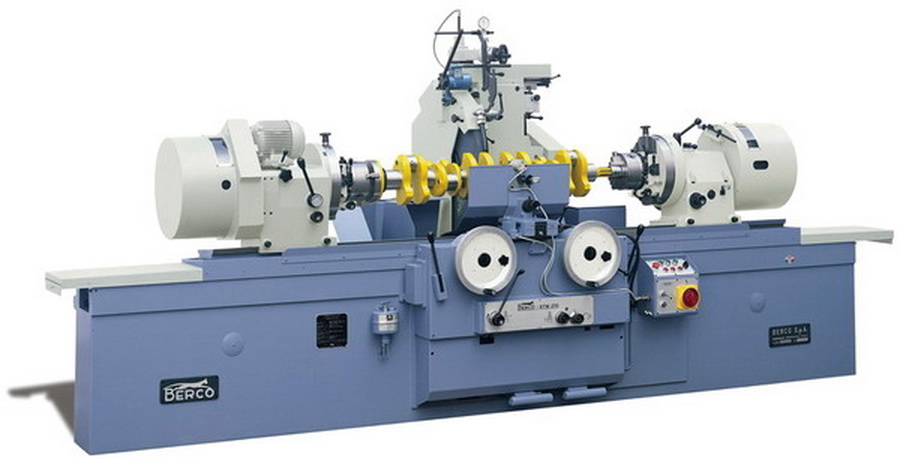
The famous Berco: they were good machines, but their time is long over, and they will no longer be made
4. AMC-SCHOU is a famous Danish brand of grinding machines, which for a long time held the first place in the world in all parameters (quality, durability, reliability, price). However, 12 years ago, the plant in Denmark was first closed as unprofitable, and then sold to a Chinese investor and completely exported to China. This was a serious strategic mistake, and it did not save the new owner from old problems but added a whole series of new ones. As a result, the products, including the famous Danish grinding machines for crankshafts, instead of remaining Danish (and Danish traditions are expensive), thanks to illiterate Chinese management, quickly turned into Chinese.
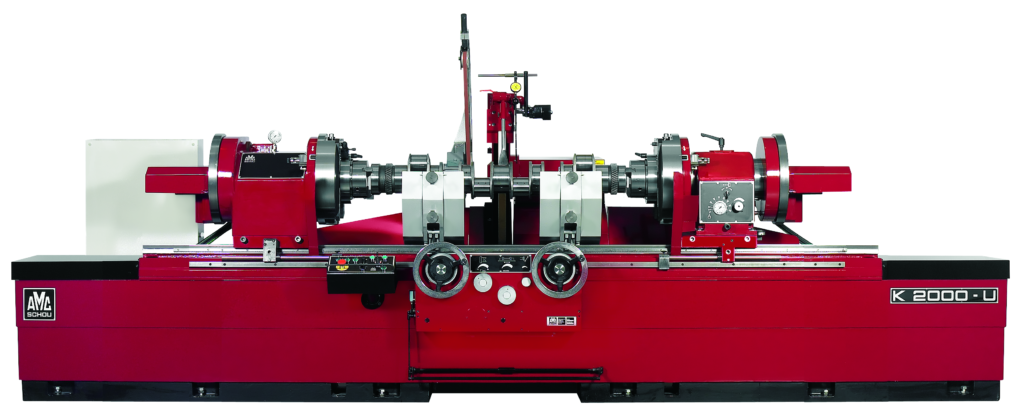
The once famous Danish AMC-SCHOU machines have long since become Chinese and have practically lost their Danish quality traditions, replacing them on Chinese (have you ever seen them?), but saved all the Danish prices.
Naturally, it was not possible to develop and expand production in China due to the lack of demand for Chinese products in this sector of mechanical engineering in the world. In addition, it was not possible to attract Danish specialists to work in China. As a result, the Chinese plant gradually switched to working on the domestic Chinese market, although at present the Chinese owner still has an office in Denmark.
Despite the fact that this equipment is already completely Chinese-made with typical Chinese quality, it continues to be offered at typical European prices. The crankshaft grinding machines, although successful, have an outdated design based on hydraulics and manual push-button and lever control, which has not been updated for more than 30 years. For some time now, in addition to conventional hydraulic machines with manual control, Chinese comrades have also begun to offer CNC modifications, but since such a Chinese modernization of a Danish machine is difficult to imagine, nothing is known about their real use in repairs.
There are no other manufacturers of grinding machines left in Europe, and no new ones have appeared (the well-known Italian company Comec does not have grinding machines of this type in its production program). The stagnation of the production of grinding machines for crankshafts was a consequence of the significant decline in the engine repair market that has occurred over the past 15 years – both in Europe and in some other countries of the world. However, the processes that are currently taking place in Europe may well cause a new rise in repair, causing, in turn, an increase in the production of repair machines.
Conclusions:
1. In Europe, at present, there are actually only 1.5 companies left that are European manufacturers of grinding machines for crankshaft repair.
2. The AZ company seems to be the only one in Europe that makes at least some machines for grinding crankshafts. However, their design is based on outdated hydraulics and welded steel frames, which is not the best solution for accuracy and stability.
3. Robbi seems to continue to offer outdated classic hydraulic machines with push-button and lever manual control from 40 years ago, but there is already information that their production has ceased as unprofitable.
4. Other manufacturers have either closed production long ago, or it is not European.
5. However, it is important to note that European equipment always has technical support from the manufacturer if production is running. However, the European mentality makes any actions extremely slow (including production itself, the terms of which have increased to 8-9 months or more).
II. America:
North America – USA
The following brands of crankshaft repair grinding machines were presented on the American market in past years:
1. Van Norman – rebranding of the AZ brand for the US market, the company currently does not exist.
2. Storm Vulcan – rebranding of the Scledum brand for the US market, the company currently does not exist.
3. RMC is a rebranding of the Robbi brand for the US market, the company also produces its own CNC machining centers for engine repair (while competing with Rottler).
The first two companies currently do not produce any repair grinding machines, or other types of machines. RMC traditionally includes boring, surface grinding and grinding machines for crankshafts manufactured by Robbi in its catalogue, but due to Robbi’s general policy regarding repair equipment, there is no reliable data on whether such machines are actually supplied and sold in the USA. Nothing is known about other companies producing crankshaft grinding machines in the USA.
South America – Brazil
Unlike North America, there are manufacturers in South America. These are:
Chinelatto is a leading manufacturer of crankshaft grinding machines in South America. The company develops and manufactures its own high-quality machines, the machines are compact, and some models can be installed in mobile workshops (the quality and parameters are indicated by the fact that, according to rumors, this equipment is purchased by the Israel Defense Forces).
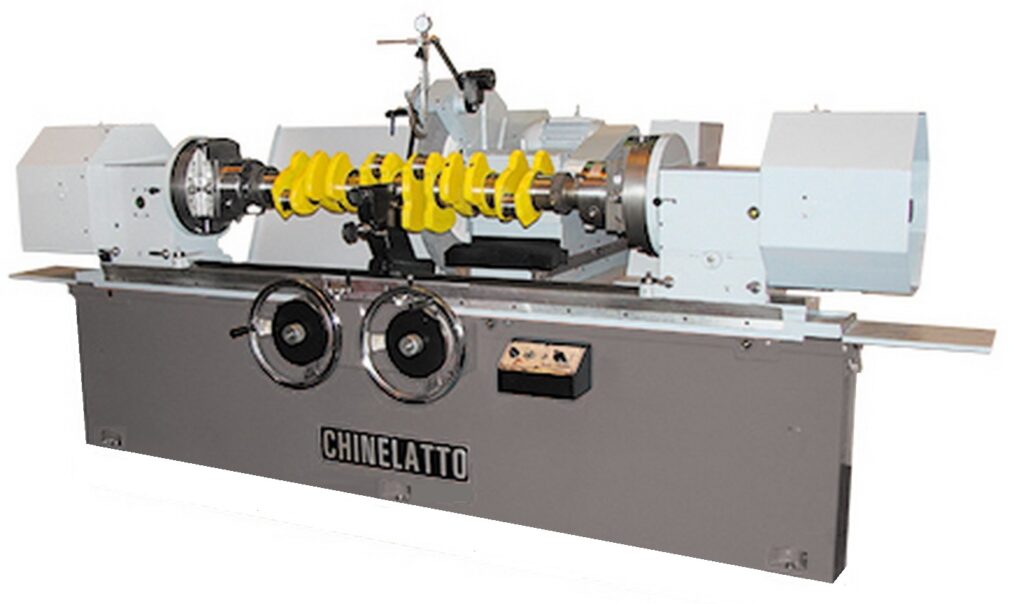
Brazil’s Chinelatto produces a limited line of machines of decent quality, but logistical problems do not contribute to the brand’s popularity.
For grinding crankshafts, the company offers mainly small grinding machines, which are practically not available in the programs of other manufacturers – for example, for shafts 850-1000 mm long, and the largest machine is 1500 mm. However, due to logistical problems, this equipment is not widely used in the world.
Conclusions:
1. Currently, the USA does not manufacture equipment for repair grinding of crankshafts.
2. There are manufacturers of such machines in South America, but this equipment has not spread around the world due to logistical problems, the complexity of communications with the other part of the world and the limited size of the machines produced.
III. Turkey
Unlike Europe, in Turkey, engine repair is traditionally developed and extremely widespread in all cities (for example, in Ankara alone there are more than 50 workshops). In accordance with the high demand, the supply is also quite high – in Turkey there are 4 main manufacturing companies offering grinding machines for crankshafts. This is:
1. Poleks is the #1 manufacturer in Turkey in terms of quality and price, a full-cycle plant (from bed casting to high-precision guide grinding and assembly) located in Konya, produces modern grinding machines of its own design with servo drives, touch control and PLC automation. The most popular machines are produced specifically for the warehouse, which dramatically, many times, reduces the time of preparation for shipment. Prices for this equipment are approximately 20% lower than classic European machines with manual control. In addition, the company opened a new plant in the USA (compare this with the Danish AMC-SCHOU).

Today Poleks is a recognized leader in Turkey, however the price of these machines has not been Turkish for a long time. Please note – the machine does not have a wheel feed or table movement flywheel, their functions are transferred to electronic regulators.
2. Saritaş (Saritash) is the main competitor of Poleks, the plant is also located in Konya and produces good grinding machines, including those with touch control and servo drives, however, there are complaints about some models.
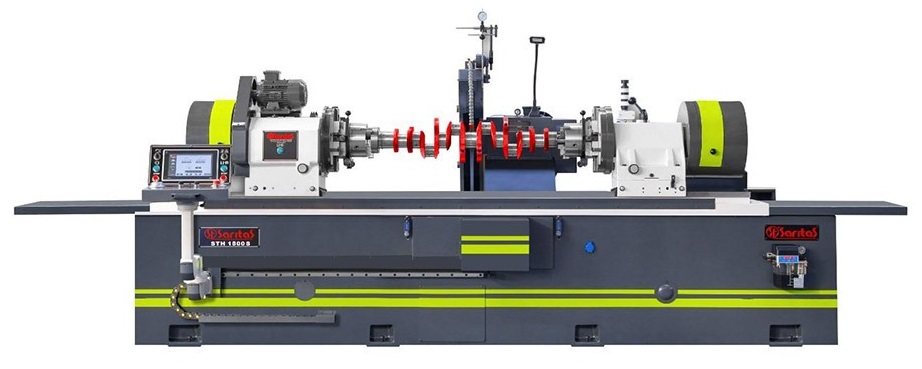
Saritas machines are generally very well made and compete with Poleks in many ways.
3. Honmaksan — solid-looking classic hydraulic grinding machines, some of which the company keeps in its warehouse. The plant is supposedly located in Konya, but the actual location of the production is unknown, and there is little information about the operating features, reliability and durability of these machines.
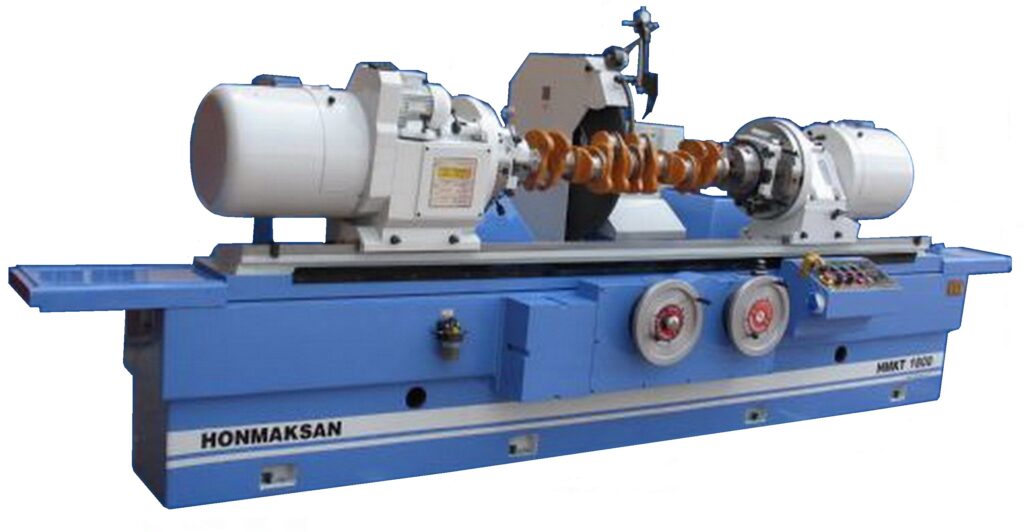
Honmaksan machines look a bit outdated, and no one knows where they are made
4. Rektaş (Rektash) – the cheapest classic hydraulic grinding machines, the plant (again in Konya) is focused mainly on the restoration and repair of old machines of various types, but also produces its own machines, including grinding machines for crankshafts. In terms of design, this is generally morally obsolete equipment with hydraulics and hexusv control. The quality of new machines from this manufacturer sometimes has complaints from customers. At the same time, almost nothing is known about the operation, accuracy and reliability of crankshaft grinding machines of this brand.

Rektas offers the cheapest machines, about which there is very little information
The lack of reliable information about grinding machines of some Turkish companies is the result of local marketing policy, when the bulk of products are sent not to Europe, but to the countries of the Middle East and Africa.
Conclusions:
1. Most factories in Turkey produce good grinding machines for crankshafts, not inferior to European ones in quality, but at an average price 1.5 times lower.
2. The highest parameters have grinding machines of the Poleks and Saritas brands.
3. Turkish production is approximately 2 times faster than in Europe, so the average production time of grinding machines rarely exceeds 3-4 months.
4. Turkish equipment, due to its proximity to Europe in distance and mentality, usually has good technical support from manufacturers, however, not all manufacturers are ready to promptly respond to claims.
IV. India
India traditionally has a colossal repair market (they repair everything). In accordance with the service market, there are a large number of companies producing repair equipment. Since this production is focused mainly on the local service market, this is reflected in technical solutions and prices.
Among the manufacturers of grinding machines, the following should be mentioned first of all:
1. Maxpreci is a leading manufacturer of machines in India, including grinding machines. It produces modern grinding machines, both hydraulic and with servo drives, with touch control, etc. The equipment is quite reliable, of proven quality, has diagnostic capabilities via the Internet, while the price is approximately 2-2.5 times lower than European analogues.
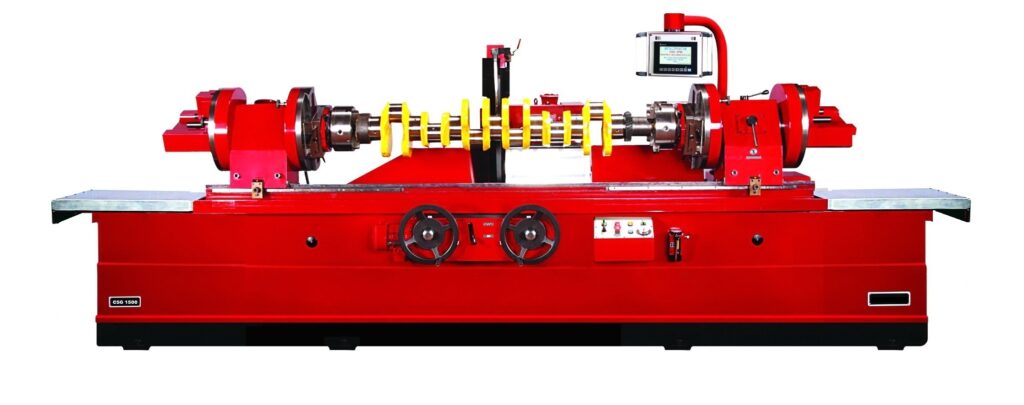
Maxpreci makes the best quality machines in India
2. Standard — a direct competitor of Maxpreci, previously part of Maxpreci, but about 20 years ago it was spun off into a separate plant. It produces equipment that is an exact copy of Maxpreci equipment, but at a price that is either close or slightly lower.
3. Vikas, Automatia — other manufacturers of crankshaft grinding machines for the domestic Indian market. The machines are practically not widespread on the world market, their accuracy and reliability characteristics are unknown.
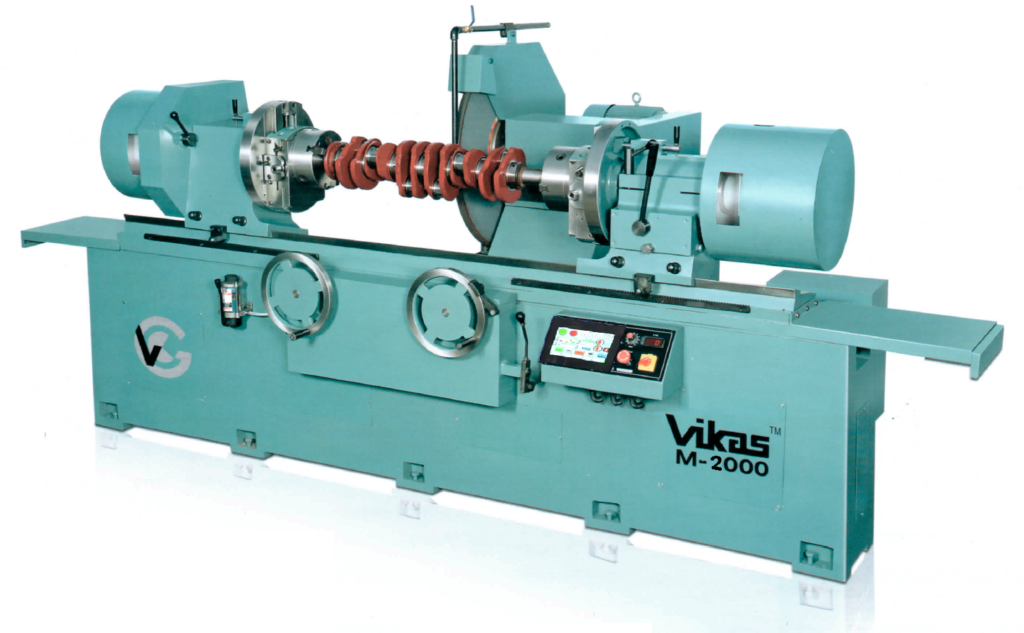
Vikas is that case when it looks good, but how it works is unknown, because it is for the domestic market
4. Maneklal is a branded company that uses its own brand to sell equipment from other factories in India. It offers the cheapest equipment, including machines with manual mechanical feed of the grinding wheel, the quality of this equipment leaves much to be desired, it can be purchased only at your own risk.

Manek machines are definitely the most beautiful, but also the cheapest. How they will work and for how long, hardly anyone can say
Conclusions:
1. In general, purchasing Indian grinding equipment, despite its very attractive low price, is a significant problem both in terms of accuracy and reliability, and in connection with significant logistical problems of delivery, as well as communication with manufacturers.
2. The vast majority of Indian factories produce cheap equipment of rather low quality exclusively for the domestic market.
3. Technical support for the equipment is difficult; in case of problems with reliability and accuracy, the customer will be forced to fix them independently, with their own efforts and, most likely, at their own expense.
4. Due to the above reasons, purchasing crankshaft grinding equipment from India, with rare exceptions, is impractical.
V. China
Judging by the photos of grinding machines from various Chinese companies, there is only one state-owned plant in China, which produces essentially one model of crankshaft grinding machine for the entire 2-billion China. The remaining brands and models are products of so-called traders who sell this machine under their own names.
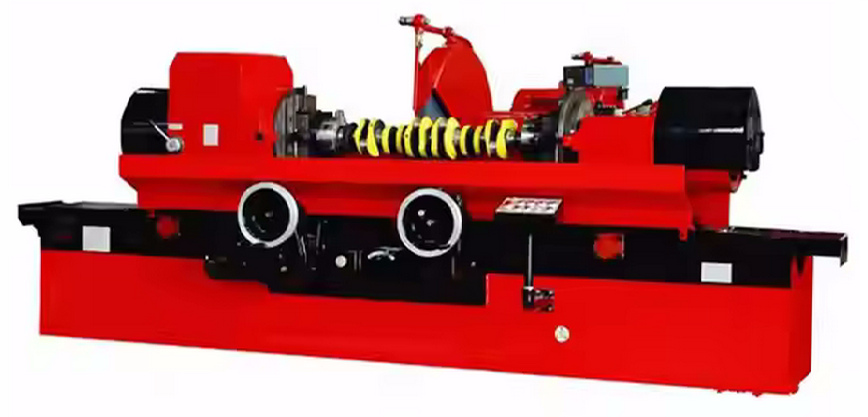
It is impossible to establish who and where made this beauty. Therefore, most likely, it will also work completely unpredictably. But it is the cheapest.
The Chinese grinding machine is a classic hydraulic one, with a discretely variable crankshaft rotation speed, with manual push-button and lever control. That is, it is actually obsolete equipment, fundamentally no different from the old Soviet one. Its price is approximately 4 times lower than the European level. It has complaints about reliability and accuracy, technical support from the manufacturer is usually impossible or seriously hampered, and you should not expect any quick solutions from the seller in response to complaints. It is strongly not recommended for purchase, even with fast and cheap delivery.
Conclusion:
Unlike other Chinese products and mass-produced goods, purchasing Chinese equipment for grinding crankshafts is currently still impractical.
VI. Taiwan and Japan, and everywhere else
Taiwan and Japan are the most technologically advanced countries, with the most famous manufacturers of all kinds of CNC machining centers of all types and kinds. However, even less than nothing is known about the production of repair machines in these countries in general, and repair machines for grinding crankshafts in particular. Therefore, the reader of this review is left to draw his own conclusions about the characteristics and quality of these magnificent, but mythical machines, if he has had the patience to read to this line.
Other manufacturers and countries (for example, Iran also produces machines of this type) are not considered in this review for obvious reasons.
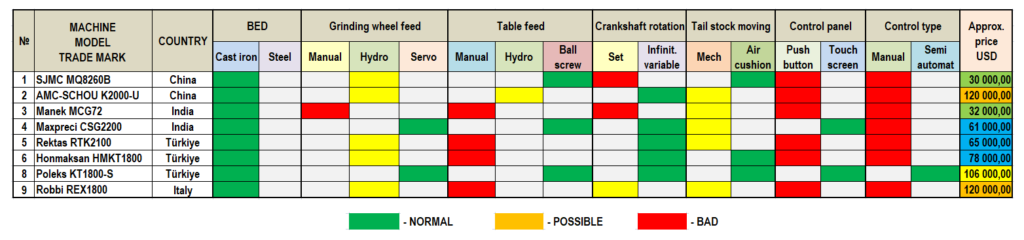
Comparative table of grinding machines from different manufacturers
All the above machines can easily be summarized in a table, where their features are most clearly visible:
Part 3. PROSPECTS AND FORECASTS OF THE CRANKSHAFT GRINDING MACHINE MARKET
Basic requirements for a modern crankshaft grinding machine
1. Cast iron frame – ensures stability. The heavier the machine, the more stable it is, as a rule
2. Anti-friction coating of the guides of the front, rear and grinding headstock and table – ensures the stability and durability of the machine for several decades without the usual annual scraping of the guides
3. Automatic lubrication system of the guides – a mandatory design element that ensures stability and durability
4. Set-up centring system with adjustment and precise control of the position in 2 planes – ensures precise alignment of the position of the crankshaft journal axis in the axis of rotation of the machine faceplates
5. Quick, within a few minutes, readjustment of the machine for grinding from main journals to connecting rod journals and vice versa, including without removing the chucks
6. Smooth adjustment of the crankshaft rotation – allows you to select the optimal grinding modes depending on the size of the crankshaft
7. Ball screw mechanism and servo drive for feeding the grinding wheel – ensures grinding accuracy, has a significant advantage in accuracy before hydraulic feed
8. Smoothly adjustable and controlled force and movement of the tailstock quill – necessary for quick installation and precise grinding of shafts in centers
9. Touch screen with digital reading of positions/movements – one of the main elements of modern machine equipment
10. Air cushion for easy movement of the tailstock – a desirable option for convenience and speed of work
11. Device for polishing journals after grinding – a mandatory element of the machine and grinding technology
12. Measuring device for continuous size control during grinding – significantly increases the speed of work on the machine. It is highly desirable that such a device be electronic
13. Other requirements ensuring accuracy and productivity

Recommendations for consumers
1. Crankshaft grinding machines are the most complex, precise and expensive of all types of engine repair machines. This determines high requirements not only for machine manufacturers, but also for technical specialists of repair organizations, including operators of these machines.
2. The cheaper the crankshaft grinding machine, the less it usually meets the requirements for modern grinding machines. However, the price is not a completely determining parameter – there are also expensive grinding machines of outdated design.
3. Equipping a workshop with obsolete Soviet-made machines, as well as used machines from foreign manufacturers, is now completely pointless both because the parameters of these machines do not meet the precision requirements for processing crankshafts of modern engines, and because of organizational and economic problems associated with the impossibility of finding an operator to work on them.
4. At the same time, the choice of high-quality equipment for crankshaft repair grinding is a significant problem due to the decrease in the number of European and the increase in the number of Asian manufacturers.
5. Modern European equipment for crankshaft repair grinding is now practically unprofitable due to the abnormally large gap between the extremely high price of the equipment and the extremely low prices for work on it in repair shops in Ukraine (including due to the extremely low quality of such work performed on old Soviet machines).
6. Equipment of Asian origin, on the contrary, while affordable, usually has problems with reliability, durability and machining accuracy, which can also make it unprofitable due to high operating costs and downtime. In addition, this equipment often has significant problems with technical support from manufacturers.
7. Due to the above reasons, equipment from Turkey currently has virtually no alternative either for commercial reasons (the possibility of payback with sufficiently high accuracy and reliability), or in terms of production times and technical support. However, it is necessary to take into account the peculiarities of the Turkish machine tool market and when ordering equipment, choose more reliable manufacturers that produce more modern models of machine tools. In addition, some models are currently clearly overpriced, which greatly limits the final choice possibilities.
Alexander Khrulev©
Dr.Eng.Sci., Senior researcher
*This article represents the author’s value judgment (opinion) on the topic discussed in the article and expresses a personal point of view that does not claim to provide irrefutable evidence or assert any indisputable facts. Accordingly, any use, in whole or in part, of the materials in this article must include a reference to the author’s value judgment.
