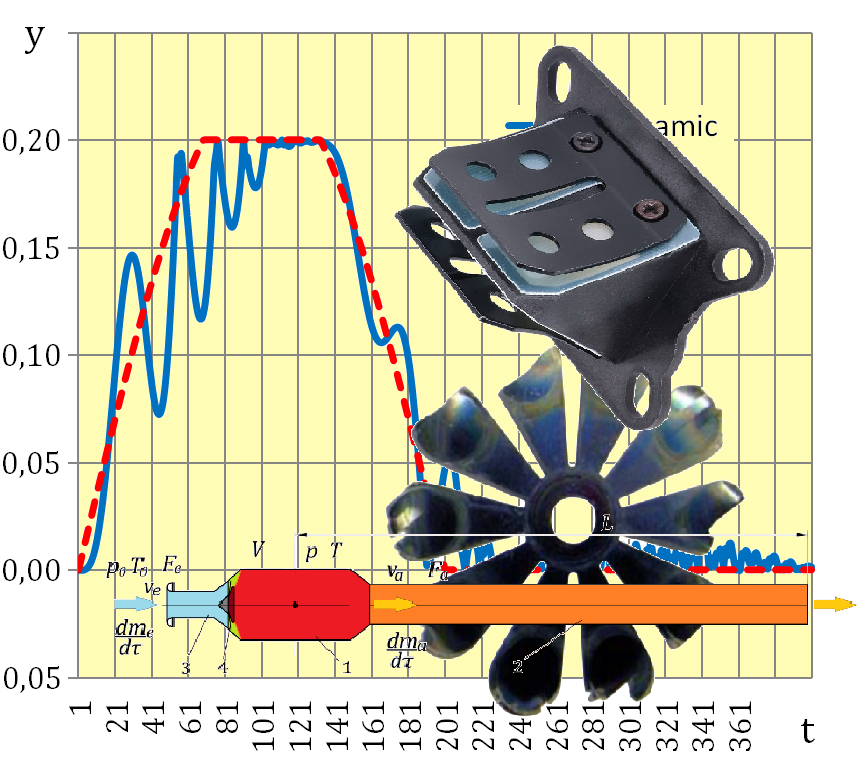
 As it has become known recently, the topic of pulse jet engines is gaining popularity again, so we, out of habit, also decided to contribute to this matter. At first, we conducted some research and even published an article on modeling the flow in the resonant exhaust pipe of a pulse jet engine, and it is on this resonance that the entire working process of this engine is built. However, it later turned out that for the new Ukrainian cruise missile “Trembita” not the classic, valved, but the valveless version of the engine was chosen. Unfortunately, the valveless pulse jet engine is significantly inferior to the valved one in all parameters, including fuel consumption and thrust, but especially in speed characteristics (the thrust of a valved pulse jet engine increases with increasing flight speed, while it decreases for a valveless one).
80 years ago, it was the petal (reed) valves that allowed the German V-1 cruise missile to reach a speed of 850 km/h, which would have been unachievable for a valveless engine. At the same time, petal valves have a very limited service life, which requires long-term debugging, although their design itself is extremely simple. Therefore, in order to restore confidence in the valved type of the pulse jet engine, we supplemented our research with modeling of the petal valve operation.
Read our article about the petal valve of the pulse jet engines >>>